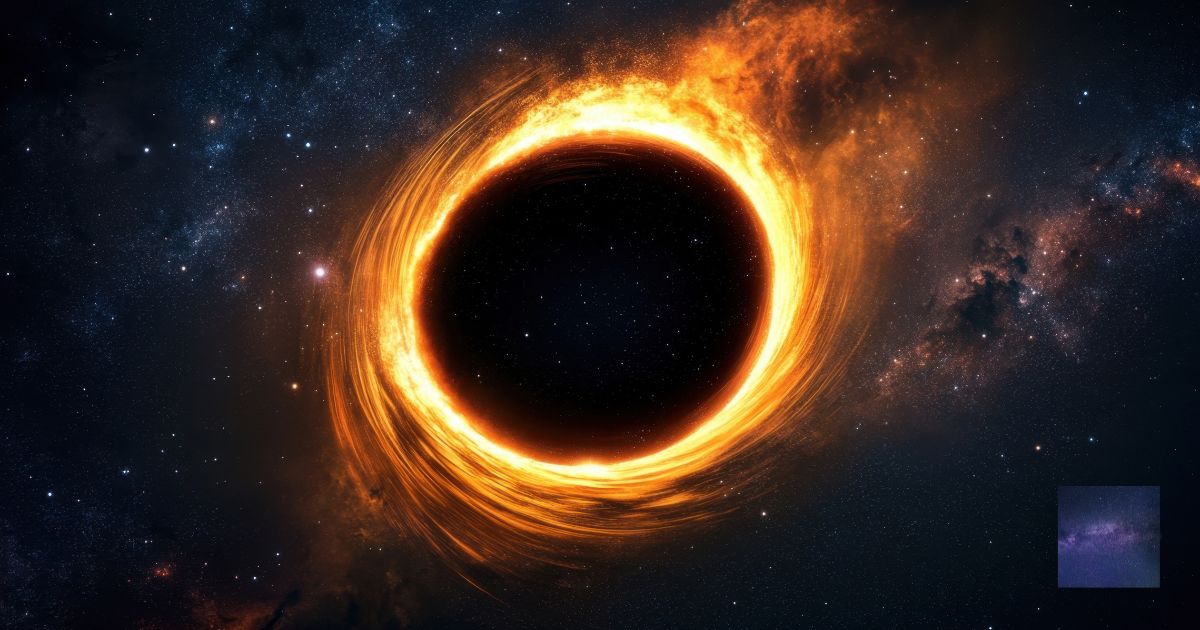
An Active Galactic Nucleus (AGN) is the term scientists use for the extremely bright, energetic center of some galaxies. It is essentially a supermassive black hole that is actively “eating.” When gas, dust, and even whole stars get too close to the black hole, they don’t just fall straight in. Instead, they spiral around it at incredible speeds, forming a flat, intensely hot, and rapidly spinning structure called an accretion disk. This disk is heated by friction and gravity to millions of degrees, causing it to shine brighter than all the stars in the rest of the galaxy combined. The sheer amount of energy released from this disk is what makes the galaxy’s core “active” and bright enough to be seen across billions of light-years. The energy release isn’t just light; it is a chaotic, powerful flow of highly energized particles and intense radiation that blast outward into the surrounding space. This period of intense, active feeding is the key event that leads to the galaxy’s eventual shutdown.
How Does a Black Hole’s Energy Affect the Gas in a Galaxy?
The process of a black hole shutting down star formation is known as AGN feedback. It is a crucial idea in modern astronomy. To understand it, think of a galaxy as a kitchen with a giant oven (the star-forming gas clouds) that needs to be kept cold to bake bread (stars). The supermassive black hole acts like a massive, uncontrolled heater installed right in the middle of the kitchen. As the black hole feeds, the immense energy from its accretion disk blasts out in two main ways: powerful radiation and colossal jets of plasma. This energy heats the cold gas clouds in the galaxy, which are the main ingredient for making stars. Stars can only form when the gas is cold enough to clump and collapse. Once the temperature is raised, even by a small amount, the gas expands and can no longer condense to start the fusion process. By heating and stirring up the gas reservoir, the black hole effectively destroys the galaxy’s star-making ability, cutting off the fuel supply for new stars.
Do Supermassive Black Holes Fire Jets That Push Gas Out?
Yes, they absolutely do, and these jets are one of the most visible and powerful ways a black hole gives “feedback” to its galaxy. When the black hole’s magnetic fields interact with the rapidly spinning matter in the accretion disk, they can channel and launch two narrow, powerful beams of plasma from the black hole’s poles. These beams, known as relativistic jets, shoot out at nearly the speed of light, extending for hundreds of thousands of light-years, sometimes far beyond the edges of the galaxy. Imagine a cosmic lighthouse with two incredibly focused, high-speed spotlights. As these jets blast through the galactic gas, they act like a giant piston, carving out huge bubbles and cavities. This mechanical push is extremely effective at sweeping the surrounding gas out of the galaxy entirely, or at least pushing it so far away and heating it so much that it can never fall back to cool down and form stars again. This process has recently been confirmed by studies showing that galaxies with radio jets have significantly faster and more energetic gas outflows.
Is the Black Hole Activity a One Time Event or a Long Process?
The process of quenching is not usually a sudden, single blast but often a self-regulating, cyclical process. The supermassive black hole doesn’t stay active forever. As it ejects or heats the gas, it removes its own fuel source. Once all the nearby gas has been cleared out, the accretion disk shrinks, the AGN shuts down, and the black hole goes to sleep. It becomes a dormant black hole, like the one we have at the center of the Milky Way. When the black hole is dormant, the remaining gas in the galaxy begins to cool and fall back toward the center. This new gas eventually feeds the black hole, causing it to “wake up” and become active again, restarting the powerful feedback cycle. This cyclical heating and cooling, turning the AGN on and off, is what helps keep the galaxy in a long-term “quenched” state, preventing large-scale star formation over billions of years. It’s a delicate, ongoing balance of heating and cooling that maintains the galaxy’s sterile, red-and-dead state.
What Does “Radio Mode” Feedback Mean in Simple Terms?
The feedback process is often categorized into two main types: “quasar mode” (or “radiative mode”) and “radio mode” (or “mechanical mode”). The radio mode is the one most strongly associated with keeping a galaxy permanently quenched. It typically happens when the black hole is less actively feeding, often residing in large, already gas-poor elliptical galaxies. In this mode, the power comes mostly from the colossal, slow-moving radio jets shooting out of the black hole. These jets don’t heat the gas as violently as the radiative wind, but they are highly effective at providing a constant, long-term stirring and heating mechanism to the hot, diffuse gas that surrounds the galaxy. Think of the jets as a giant cosmic paddle that continuously stirs a huge pot of gas. This stirring motion prevents the hot gas from ever settling and cooling down enough to form new stars. This gentle but persistent heating is the key to maintaining the “sterilized” condition of the galaxy for billions of years, slowly transforming it into a red, quiet, and non-star-forming elliptical galaxy.
Does This Black Hole Action Help or Hurt the Galaxy?
The answer to whether this action helps or hurts the galaxy is a complex one, but for the galaxy as a star-forming system, it is ultimately a self-inflicted wound that ends its vibrant life. From the perspective of galaxy evolution, the black hole’s feedback is a massive regulator. In the early universe, feedback may have helped to control the growth of the largest galaxies, preventing them from becoming too massive too quickly. However, the final stage of quenching, or sterilization, signals the end of growth for that galaxy. Once a galaxy is quenched, it can no longer generate new stars, which means it cannot create the heavy elements needed for complex planets and life to form in the future. The galaxy becomes a relic of the past, filled with aging stars that will slowly burn out over trillions of years. In essence, the supermassive black hole, while essential for the galaxy’s early development, becomes the instrument of its eventual, quiet death.
Why Do Larger Galaxies Have Bigger Black Holes?
One of the most surprising facts in astronomy is the tight connection between the mass of a galaxy and the mass of the supermassive black hole at its center. This connection is seen in what is called the M-sigma relation, which shows that the black hole’s mass is always proportional to the mass of the galaxy’s central “bulge” (the dense collection of stars at the core). This relationship strongly suggests that the black hole and its host galaxy do not evolve separately; they grow up together. Their growth is tightly linked by the very feedback mechanism we have been discussing. When the galaxy has a lot of gas and is growing fast, the black hole has plenty of fuel and also grows fast. But the growing black hole, through its energetic winds and jets, eventually limits its own fuel supply and that of the galaxy. This constant give-and-take, this self-regulating cycle, ensures that neither the black hole nor the galaxy can get too big without the other keeping up. They are tied together in a co-evolutionary dance, which is why a bigger galaxy always has a bigger black hole.
Conclusion
The idea that a black hole, a cosmic drain of infinite gravity, can also be the universe’s most powerful stellar oven is one of the great breakthroughs of modern astrophysics. The supermassive black hole, sitting in a galaxy’s core, is not a passive passenger. Instead, through the tremendous energy of its Active Galactic Nucleus (AGN), it generates powerful radiation and high-speed jets. These forces are the agents of AGN feedback, which heats and expels the cold, star-forming gas across the galaxy. This process, known as quenching, is what turns a vibrant, star-birthing spiral into a quiet, red, and ultimately sterile elliptical galaxy. The black hole acts as a cosmic regulator, controlling its host’s growth and sealing its fate as a non-star-forming giant. This surprising balance explains why the universe has so many different types of galaxies, and it highlights the powerful, often destructive, interconnectedness of cosmic structures.
If the black hole at the center of the Milky Way were to wake up and become an active quasar, how long do you think it would take for its energy to shut down star formation across our entire galaxy?
FAQs – People Also Ask
Why is the process called “sterilization” in astronomy?
The term “sterilization” is used as a strong way to describe the effect of the supermassive black hole on its galaxy because it completely shuts down the galaxy’s ability to reproduce. Just as a sterile environment prevents the growth of living things, the black hole’s powerful energy prevents the necessary cold gas from cooling and clumping to form new stars. The galaxy loses its fertility, so to speak, and becomes an aging system that only contains old stars.
Is the black hole at the center of our Milky Way sterilizing our galaxy right now?
No, the supermassive black hole at the center of the Milky Way, known as Sagittarius A* (pronounced “A-star”), is currently dormant or “quiescent.” It is only lightly feeding on small amounts of gas and dust, making it very quiet compared to an active galactic nucleus. While it had active periods in the past, right now it is not producing the kind of powerful, galaxy-wide winds or jets that would be needed to heat and eject the cold gas clouds necessary to stop the Milky Way’s current rate of star formation.
What is the most important ingredient needed for a galaxy to form new stars?
The most important ingredient a galaxy needs for star formation is a large supply of cold, dense molecular gas, primarily hydrogen. Stars are born when these cold, dark clouds become so dense that they collapse under their own gravity, triggering the nuclear fusion that makes a star shine. The black hole’s feedback works by heating this cold gas, preventing it from clumping together and thus eliminating the raw material needed to build new stellar generations.
Does the black hole actually suck all the gas out of the galaxy?
The black hole does not suck all the gas out like a vacuum cleaner. Instead, the powerful energy it releases, in the form of radiation and jets, pushes the gas out and heats up the surrounding material. The jets act as a mechanical force that physically drives the gas outward and away from the galaxy’s core, giving it enough speed to escape the galaxy’s gravitational pull and preventing it from falling back.
What is the difference between “quasar mode” and “radio mode” feedback?
Quasar mode happens during a black hole’s most active, intense feeding phase, releasing huge amounts of blinding radiation and fast winds that quickly clear a lot of gas. Radio mode, on the other hand, happens when the black hole is less active but still launches continuous, powerful radio jets. The radio jets are better at providing long-term, gentle heating to the hot gas surrounding the galaxy, which keeps it from ever cooling down to form stars again.
Will our Milky Way galaxy eventually be sterilized and stop forming stars?
Yes, the Milky Way is expected to eventually stop forming stars, but not necessarily because of its own black hole. While our black hole has periods of activity, the ultimate fate of the Milky Way is likely tied to its upcoming collision with the Andromeda galaxy in about four to five billion years. This merger will first trigger a massive burst of star formation, but the resulting large elliptical galaxy will then likely settle into a quenched state, either due to its now more active black hole or simply because all the available star-forming gas has been used up in the collision.
Are all galaxies with supermassive black holes currently active?
No, most of the large galaxies in the universe today, including the Milky Way, have a supermassive black hole that is currently inactive, or dormant. The active phase, known as the Active Galactic Nucleus (AGN) phase, is thought to be relatively short-lived compared to the total life of the galaxy. A black hole only becomes active when a significant amount of material, like a gas cloud or a disrupted star, falls into its gravitational grasp and begins to form the bright accretion disk.
How does the energy from the black hole travel across the vastness of the galaxy?
The energy from the black hole travels across the galaxy through two main channels: electromagnetic radiation (like X-rays and ultraviolet light), which travels at the speed of light, and high-speed outflows (winds and jets) of gas and particles. The light and X-rays can directly heat the nearby gas, while the powerful winds and jets physically push and stir the gas clouds, transferring their enormous kinetic energy to the gas far out into the galaxy’s main disk and halo.
What happens to the expelled gas after it is pushed out by the black hole?
The gas that is expelled by the black hole is either thrown out of the galaxy completely into the much hotter, sparse intergalactic space, or it is trapped in a hot, diffuse halo around the galaxy. Crucially, in both cases, the gas is so hot that it cannot cool down enough to rain back onto the galaxy’s disk to form new stars. This gas is essentially locked away, preventing the galaxy from ever replenishing its stellar fuel supply.
How do scientists know that the black hole is the cause and not just a correlation?
Scientists use advanced computer simulations and observations of distant galaxies to prove the causal link. The simulations, which include the physics of black hole feedback, can accurately reproduce the observed properties of quenched galaxies in the universe, a result that cannot be achieved without including the black hole’s heating and expulsion effects. Furthermore, astronomers observe massive outflows of gas moving directly away from the brightest, most active galactic nuclei, providing direct observational evidence that the black hole’s activity is the driving force behind the sterilization.