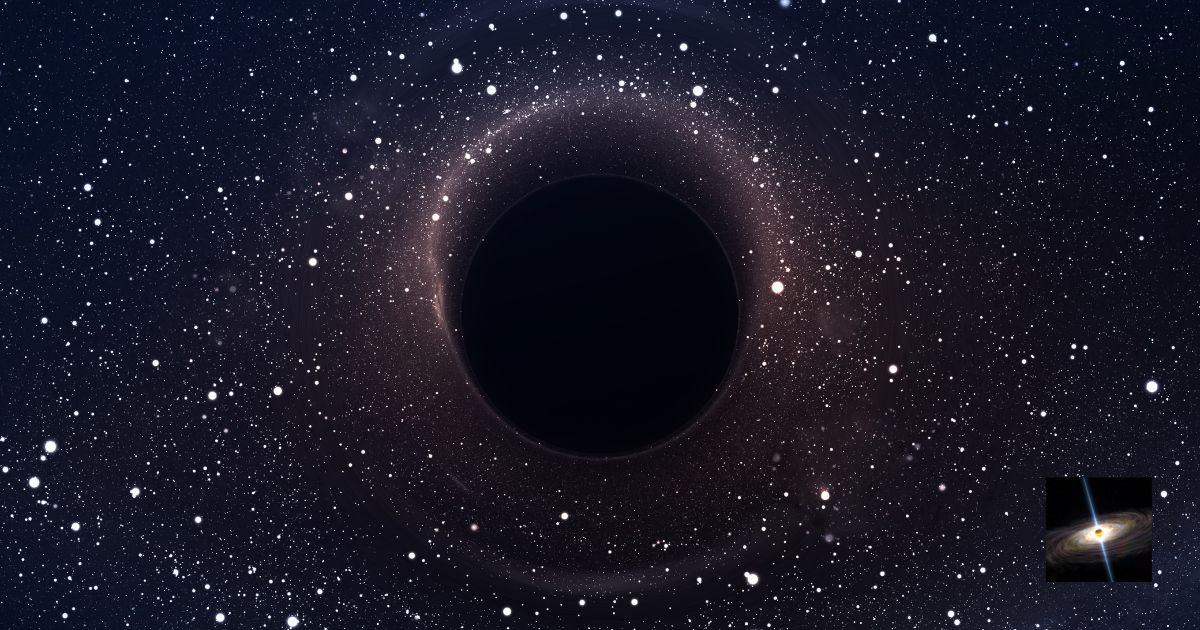
The universe we live in is a huge, expanding place, and scientists have been trying to figure out its ultimate fate for decades. Will it shrink back down? Will it just fade away slowly? For the longest time, the most likely end seemed to be the “Big Freeze,” where everything gets too far apart, cold, and dark. However, a strange, powerful force called dark energy changed everything we thought we knew.
We know dark energy exists because it is pushing all the galaxies away from each other, making the universe expand faster and faster. It is the reason the expansion is accelerating. This mysterious force makes up about 70% of the entire universe, and its properties determine how our cosmic story will end. If this energy gets strong enough—specifically, if it becomes what physicists call “phantom dark energy”—then we face a much more dramatic and violent ending: The Great Rip, also known as the Big Rip.
Recent data from major cosmic surveys, like the Dark Energy Spectroscopic Instrument (DESI) and the Dark Energy Survey (DES), have given us new hints about how dark energy has behaved in the past and how it might change in the future. These findings, often discussed heavily in 2025 and with final data collection continuing into 2026, suggest dark energy might not be as simple and constant as we once assumed. But what exactly is the Great Rip, and why are these new hints creating a ‘warning’ in the world of cosmology?
What Is the Main Difference Between the Big Rip and the Big Freeze?
The ultimate end of the universe depends entirely on the nature of dark energy, and the two main theories are the Big Freeze and the Big Rip. The Big Freeze, also called Heat Death, is the “gentle” end. In this scenario, dark energy stays constant—it is a fixed amount of energy for every patch of space. This constant push causes the universe to expand forever, but the expansion rate itself slows down a little over time or holds steady. Galaxies would move so far apart that the night sky would eventually go completely dark. Stars would burn out, and new ones would stop forming because the gas clouds needed to make them would be too spread out. Eventually, all that would be left are black holes and stray, cold particles floating in an endless, empty void. The Big Freeze is slow, cold, and a bit sad, but all structures like planets and atoms would stay intact.
The Big Rip is anything but gentle. It is the catastrophic scenario that occurs if dark energy is not constant but instead gets stronger over time. If dark energy increases in strength as space expands, it eventually overcomes every other force in the universe. This powerful, growing push would not just separate galaxies; it would tear apart everything held together by gravity, then everything held together by electromagnetic forces (like molecules and atoms), and finally, it would rip apart the atomic nuclei themselves. In the final moments of a Great Rip, the expansion rate of space would become infinite, literally tearing the fabric of spacetime into pieces.
What Kind of Dark Energy Is Needed to Cause a Great Rip?
For the universe to end in a Great Rip, it must contain a hypothetical type of force called phantom dark energy. The standard way physicists describe any kind of energy in the universe is through a measurement called the equation of state parameter, symbolized by the letter ‘$w$’. This number is a ratio of the energy’s pressure to its density. For most forms of energy, this number is $w$ $\ge -1$. In the standard model of cosmology, the most simple and accepted version of dark energy, known as the Cosmological Constant (Lambda), has an equation of state parameter of exactly $w = -1$. If $w$ is exactly $-1$, the universe expands forever but the Big Rip cannot happen.
However, if dark energy is phantom energy, its equation of state parameter must be slightly less than $-1$ (so, $w < -1$). This condition, $w < -1$, means that the energy density of dark energy actually increases as the universe expands. Think of it like a runaway train: the farther it goes, the more fuel it somehow gets, making it accelerate even faster. This constant, runaway increase is what allows the dark energy’s repulsive force to overpower the gravitational and nuclear forces holding all matter together, leading directly to the ultimate cosmic disaster of the Great Rip.
What Does the Current Data Say About Phantom Dark Energy in 2025?
The new, detailed maps of the cosmos coming from surveys like DESI are giving us the tightest constraints yet on the value of $w$. The great news is that the latest combined data still shows that the value of $w$ is extremely close to $-1$, which is the value that means the Big Rip won’t happen. For example, recent analyses often place $w$ at a value like $-1.028$ with a tiny uncertainty range. This is the reason there is no true, immediate “2026 Warning.” A tiny deviation below $-1$ is still technically a possibility, but the closer $w$ is to $-1$, the further into the future the Big Rip is pushed, potentially to hundreds of billions of years away.
However, the reason for the scientific excitement and the ‘warning’ is that some recent results suggest that the $w$ value is not completely constant and may have changed over the universe’s history. Some cutting-edge models suggest that dark energy might have acted like a phantom energy in the past (when the universe was younger) and then weakened over time to be closer to $-1$ today. This possibility that dark energy is dynamic (changing) is the bombshell finding. It means the simple, constant model might be wrong, and we need much more complex physics to figure out what dark energy will do next. If it was phantom energy once, could it become phantom energy again in the future? This is the core question driving the current research.
What Is the Catastrophic Timeline of the Great Rip Scenario?
If dark energy were phantom energy and its strength continued to grow, the Great Rip would happen incredibly fast once it started to dominate all forces. Cosmologists have worked out a terrifying timeline based on hypothetical, but possible, models where $w$ is significantly less than $-1$ (for example, $w = -1.5$). While current data suggests the actual event is billions of years away, the final moments would be extremely quick.
| Time Before the Rip | Event Description | Structure Being Destroyed |
| ~200 Million Years | Galaxies begin to fly apart from each other, breaking up galaxy clusters. | Clusters of Galaxies |
| ~60 Million Years | Individual galaxies, like our Milky Way, are torn apart. Stars fly off into empty space. | Individual Galaxies (e.g., Milky Way) |
| ~3 Months | Planetary systems, like our Solar System, become unbound. Planets drift away from their suns. | Planetary Systems (e.g., Solar System) |
| ~30 Minutes | Planets and moons are ripped apart as the energy overpowers gravity and chemical bonds. | Planets and Large Objects |
| $10^{-19}$ Seconds | The electromagnetic forces holding atoms together fail. Atoms themselves are torn apart into elementary particles. | Atoms and Atomic Nuclei |
This sequence shows that the Great Rip would first overcome the weakest force (gravity over long distances) and finally destroy the strongest forces (the nuclear forces) in the final, terrifying fraction of a second. This rapid sequence from galactic break-up to the tearing apart of matter itself is what gives the “Rip” scenario its dramatic name.
How Does the DESI Survey Relate to Predicting the Universe’s End?
The Dark Energy Spectroscopic Instrument, or DESI, is one of the most powerful tools currently mapping the universe. It is a scientific collaboration that uses a telescope to create a huge, three-dimensional map of galaxies and distant, bright objects called quasars. The goal is to map over 50 million of these objects by 2026. Why is this map so important for the end-of-the-universe question?
DESI is designed to track a feature called Baryon Acoustic Oscillations (BAOs). These are subtle, repeating patterns in the distribution of matter that act as a sort of “standard ruler” in the cosmos. By measuring how stretched this ruler is at different times in the universe’s past, scientists can precisely track the history of the universe’s expansion. The more detail we have on the expansion history, the better we can determine the behavior of dark energy—that is, whether its repulsive force has been constant ($w = -1$) or if it has been changing ($w \ne -1$). DESI’s highly accurate data, especially when combined with data from other projects like the Planck satellite, is what is fueling the current debate about whether dark energy is truly constant. The instrument isn’t looking for the rip itself, but for the tiny physical signature of a changing dark energy that would make the Rip possible.
Why Is the Idea of a Changing Dark Energy So Puzzling to Scientists?
The simplest idea for dark energy, the one that perfectly fits the Cosmological Constant ($w=-1$), is that it is the energy of empty space itself. This vacuum energy should always have the same density everywhere and at all times, no matter how much the universe expands. Imagine a balloon: as it inflates, the amount of dark energy in a tiny one-inch square on the balloon’s surface would stay exactly the same. This simplicity is beautiful and mathematically elegant, which is why it has been the standard model for so long.
If dark energy is changing, as some recent data hints, it means the simple “energy of empty space” idea is incomplete or wrong. It means dark energy must be some kind of dynamic field that can evolve, grow, or decay over time. One proposed example is a hypothetical field called quintessence, which would cause the expansion to decelerate slightly, but other, more complicated models allow the field to shift from non-phantom to phantom behavior. This shift is puzzling because it requires entirely new physics beyond Einstein’s original idea. Figuring out what drives this change is now one of the biggest puzzles in all of science, and the results expected in 2026 will be critical in deciding if we need to completely rewrite the rulebook for the cosmos.
Conclusion
The idea of the Great Rip, while terrifying, is a theoretical possibility that depends on the properties of a mysterious force we call dark energy. For this catastrophic end to occur, dark energy must be a runaway force known as phantom energy, with its pressure-to-density ratio ($w$) being less than $-1$. While recent, highly accurate data from cosmic surveys like DESI is leading to intense discussions about whether dark energy is changing over time—the so-called “2026 warning”—the general scientific consensus is reassuring.
Current measurements show the value of dark energy is extremely close to the constant value of $w = -1$, which rules out any immediate or near-future Great Rip. If the Rip were to happen, it is still projected to be hundreds of billions of years away, long after our Sun has died and our galaxy has merged with Andromeda. The true significance of the current research is not an impending doom, but the profound realization that the fundamental nature of our universe’s dominant energy source is more complex than we ever imagined.
If dark energy truly has changed over time, what other surprises could this mysterious cosmic force have in store for the distant future?
FAQs – People Also Ask
What is the most likely fate of the universe if the Big Rip does not happen?
If the Big Rip does not happen, the most likely fate of the universe is the Big Freeze, also known as Heat Death. This happens if dark energy remains constant ($w = -1$) or if it slightly weakens over time. In this scenario, the universe would continue to expand forever, eventually becoming so vast and cold that all matter is too spread out to interact. Stars would stop forming, all existing stars would burn out, and the universe would simply fade into an extremely cold, dark, and empty void, though all existing structures like planets and atoms would remain intact for a very long time.
Why is dark energy called ‘dark’ if it is pushing the universe apart?
Dark energy is called ‘dark’ simply because we cannot directly observe it, and we do not know exactly what it is. The term ‘dark’ in physics is used for anything that does not interact with light (electromagnetic radiation) or any of the other fundamental forces in a measurable way, except through its effects on the large-scale structure and expansion of the universe. We can only see its influence—the accelerating expansion—but the source of that influence remains a deep mystery.
How much of the universe is made up of dark energy?
According to the latest and most detailed measurements from cosmological surveys, dark energy makes up about 68 to 70 percent of the total energy density of the universe. The rest is about 25 percent dark matter (which clumps together and pulls things with gravity) and only about 5 percent is normal matter (the atoms, stars, and galaxies we can see and touch). Dark energy is the single most dominant component of the cosmos.
What is the ‘equation of state parameter’ and why is the number -1 so important?
The equation of state parameter, or ‘$w$’, is a number that tells cosmologists the ratio of the pressure of a substance to its energy density. For dark energy, this number dictates its repulsive power. The number -1 is important because it is the value for the simplest, most stable form of dark energy—the Cosmological Constant—where the energy density stays fixed even as space expands. If $w$ is exactly $-1$, the Big Rip cannot occur, but if $w$ is even slightly less than $-1$ (e.g., $-1.0001$), the Big Rip is possible, making $-1$ the critical boundary value.
How does the expansion of the universe differ from the expansion of a balloon?
When a balloon expands, the rubber itself stretches, and the air inside becomes less dense. The expansion of the universe is different because it is the fabric of space itself that is expanding, not just matter moving through a fixed space. A common analogy is a loaf of raisin bread baking: the dough (space) expands, and the raisins (galaxies) move farther apart, but the raisins themselves do not grow, and they are not moving through the dough, they are being carried apart by the expansion of the dough itself.
Could we stop the Great Rip if it were going to happen soon?
No, if the Great Rip were truly imminent—meaning $w$ was significantly less than $-1$ and the final phase was approaching—there is absolutely nothing we could do to stop it. The force of dark energy is a fundamental, global property of spacetime. It would be an unstoppable force acting on the entire universe, eventually overcoming all known fundamental forces, including gravity and the strong and weak nuclear forces. Stopping it would require manipulating the fundamental laws of nature on a cosmic scale, which is impossible with our current or any foreseeable future technology.
What is the main difference between dark energy and dark matter?
Dark energy is a repulsive force that is uniform across the universe, causing the expansion to accelerate. It acts like an anti-gravity force on the largest scales. Dark matter is an attractive force; it has mass and gravity, causing it to clump together in halos around galaxies. We know it is there because of its gravitational pull on visible matter, but it does not interact with light. They are two separate, mysterious components that together make up about 95% of the cosmos.
How will scientists continue to look for evidence of phantom dark energy in the future?
Future missions will continue to map the universe with even greater precision. The Euclid and Roman space telescopes, scheduled for operations throughout the next decade, will use advanced techniques like Weak Lensing (measuring how gravity bends light) and even more precise Supernova observations. These tools will significantly increase the accuracy of the measurements of $w$ and its potential changes over time, helping to confirm or rule out the subtle hints of a dynamic dark energy that could eventually lead to the Great Rip.
What happened to the Big Crunch theory for the end of the universe?
The Big Crunch theory suggested that gravity would eventually slow the expansion of the universe, stop it, and then pull all matter back together into a hot, dense singularity—a reverse Big Bang. This theory was largely discarded after the discovery of the universe’s accelerating expansion in 1998, which pointed to the existence of dark energy. Dark energy is a repulsive force that makes a Big Crunch impossible under the standard model. However, some new, highly complex models that suggest dark energy changes and eventually reverses its push could theoretically lead back to a Big Crunch, but these are currently speculative.
If the Great Rip is so far away, why should people care about it today?
People should care because the question of the universe’s ultimate fate is fundamental to our place in the cosmos, and the discussion about the Rip directly relates to groundbreaking current research. The effort to determine if $w$ is exactly $-1$ or slightly less than $-1$ is the effort to understand 95% of the universe (dark energy and dark matter). It drives the creation of incredible scientific instruments like DESI and forces physicists to search for new laws of nature, pushing the boundaries of human knowledge in a profound way.