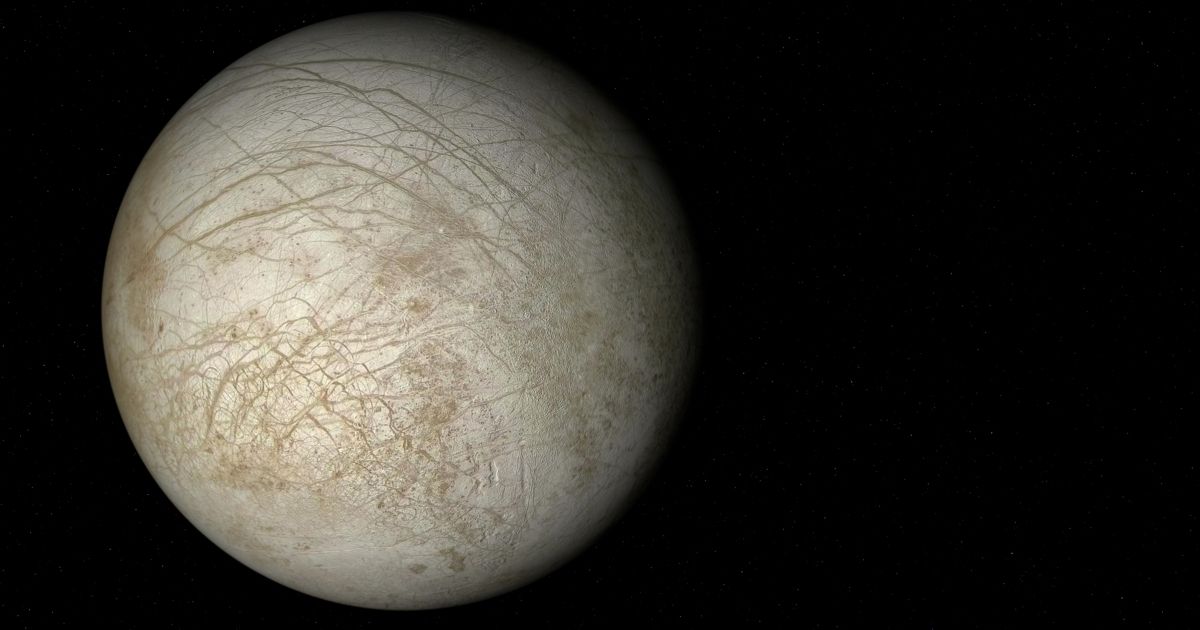
For a long time, humanity has looked up at the stars and wondered if we are alone. One of the most exciting places in our solar system to search for answers is Europa. Europa is a moon that orbits Jupiter, and it is covered in a thick shell of ice. Scientists believe that beneath this icy shell, there might be a vast ocean of liquid water. On Earth, wherever we find liquid water, we often find life. This is why Europa is such a special target for exploration. NASA is sending a spacecraft called the Europa Clipper to study this moon up close. This mission is designed to investigate if Europa has the right conditions to support life. It is an ambitious journey that could change our understanding of life beyond Earth.
The Europa Clipper is not just any spacecraft; it is a sophisticated mobile laboratory. Its main goal is not to find aliens directly, but to see if Europa has the necessary ingredients and environments for life to exist. Think of it like a detective looking for clues at a crime scene. The crime scene is Europa, and the clues are things like water, energy, and the right chemical building blocks. The Clipper will make many close flybys of Europa, gathering as much information as it can about the moon’s surface, its interior, and its potential ocean. It will use a variety of instruments to collect data, each designed to look for a specific piece of the puzzle. This mission is a major step in our ongoing search for extraterrestrial life, focusing on one of the most promising locations. What kinds of clues will the Europa Clipper be looking for, and how will it find them?
What Makes Europa a Prime Spot for Finding Life?
Europa is considered a prime spot for finding life because of several key factors that scientists have observed or inferred. The most important factor is the presence of a subsurface ocean. Evidence from other spacecraft, like the Galileo mission, suggests that Europa has a global ocean of salty liquid water beneath its icy crust. This ocean is kept warm by tidal forces from Jupiter, which means the moon is constantly being squeezed and stretched as it orbits. This internal heating prevents the water from freezing solid and could also provide a source of energy for potential life. On Earth, we see life thrive in deep-sea vents where chemical energy is abundant, and a similar environment could exist on Europa’s ocean floor. The combination of liquid water, energy, and potentially essential chemical building blocks makes Europa an incredibly compelling place to search for life beyond Earth.
How Will the Europa Clipper Study the Moon’s Ocean?
The Europa Clipper will use several advanced instruments to investigate Europa’s hidden ocean, even without landing on the surface or drilling through the ice. One key instrument is a radar system called the Radar for Europa Assessment and Sounding: Ocean to Near-surface (REASON). This radar will send radio waves down through the ice and listen for their echoes. By analyzing how these waves bounce back, scientists can create a detailed map of the ice shell’s thickness and look for signs of liquid water within or beneath it. Think of it like using sonar to map the bottom of an ocean on Earth. Additionally, the spacecraft will carry a magnetometer to measure Europa’s magnetic field. If a global saltwater ocean exists, its movement through Jupiter’s strong magnetic field should create an induced magnetic field within Europa, which the Clipper can detect. These measurements will help confirm the presence of the ocean and give clues about its depth and salinity, crucial details for understanding its habitability.
What Instruments Will Search for Life’s Ingredients?
The Europa Clipper is equipped with a suite of instruments designed to search for the chemical ingredients necessary for life. One important tool is the Europa Imaging System (EIS), which consists of wide-angle and narrow-angle cameras. These cameras will take high-resolution images of Europa’s surface, looking for geological features like cracks, plumes, or areas where ocean material might have erupted onto the surface. Such features could provide direct access to the ocean’s chemistry. Another vital instrument is the Mass Spectrometer for Planetary Exploration (MASPEX). This device will analyze gases around Europa. If the moon is venting plumes of water vapor and other chemicals into space, MASPEX can detect and identify the molecules within these plumes. This could reveal the presence of organic molecules, salts, and other compounds that are the building blocks of life. By analyzing these chemicals, scientists can determine if Europa’s ocean contains the right mixture of elements to support living organisms.
Could the Europa Clipper Detect Plumes of Water?
Yes, detecting plumes of water erupting from Europa’s surface is one of the most exciting possibilities for the Europa Clipper mission. Scientists have observed evidence of plumes on Europa, similar to those seen on Saturn’s moon Enceladus, which are known to be jets of water vapor and ice particles. If Europa is indeed actively venting material from its subsurface ocean into space, the Clipper is well-equipped to study these plumes. The spacecraft will carry instruments like the Ultraviolet Spectrograph/Europa (UVS) and the SUrface Dust Analyzer (SUDA) that can directly sample and analyze the particles within any plumes it flies through. UVS will look for specific chemical signatures in the ultraviolet light emitted or absorbed by plume material, while SUDA will directly collect and analyze dust grains ejected from the moon. Flying through a plume would offer a unique chance to directly taste Europa’s ocean without having to land or drill, providing valuable insights into its composition and potential for life.
How Will Radiation Affect the Mission and Its Discoveries?
Radiation is a significant challenge for any mission to Europa, as Jupiter’s powerful magnetic field traps energetic particles, creating an intense radiation environment around its moons. The Europa Clipper is designed to withstand this harsh environment for as long as possible. Its sensitive electronics are housed in a thick, protective vault made of aluminum and other materials to shield them from radiation damage. However, despite these protections, the spacecraft’s operational lifespan will be limited by the cumulative effect of radiation exposure. This means the mission is carefully planned to gather critical data during its numerous flybys while minimizing exposure to the most intense radiation belts. The duration and frequency of data collection are balanced against the need to preserve the spacecraft’s functionality. Understanding the impact of radiation is also important for future missions, including potential landers, as radiation could pose a threat to any potential life forms at or near Europa’s surface.
What Else Will Europa Clipper Learn About the Moon’s Geology?
Beyond the search for life, the Europa Clipper will significantly advance our understanding of Europa’s geology and surface features. The Europa Imaging System (EIS) cameras will capture stunning, detailed images of the moon’s icy crust, revealing cracks, ridges, and chaotic terrain with unprecedented clarity. These images will help scientists understand the processes that shape Europa’s surface, such as cryovolcanism (ice volcanoes), tectonic activity, and impacts from space rocks. The Europa Thermal Emission Imaging System (E-THEMIS) will measure Europa’s surface temperature, looking for warmer regions that could indicate recent geological activity or areas where the ocean might be closer to the surface. By studying these geological features, scientists can piece together Europa’s past and present geological activity, which in turn provides clues about the dynamics of its subsurface ocean and the potential for heat sources and chemical interactions vital for life. It’s like reading the moon’s history book written on its icy surface.
Conclusion
The Europa Clipper mission represents a monumental effort in humanity’s quest to understand if life exists beyond Earth. By thoroughly investigating Europa’s subsurface ocean, searching for crucial chemical building blocks, and studying the moon’s dynamic geology, the spacecraft will provide unprecedented insights into this intriguing world. From radar mapping the ice to sniffing out plumes, every instrument on the Clipper is a tool in a grand scientific detective story, aiming to answer fundamental questions about habitability in our solar system. The data it collects could revolutionize our understanding of where and how life might arise. As we anticipate the findings of the Europa Clipper, how might its discoveries reshape our perspective on the uniqueness of life on Earth?
FAQs – People Also Ask
What is the main goal of the Europa Clipper mission?
The main goal of the Europa Clipper mission is to determine if Europa has the potential to harbor life. It will do this by studying Europa’s subsurface ocean, its composition, the thickness of its ice shell, and whether it has the necessary chemical and energy sources to support living organisms. The mission is designed to assess Europa’s habitability.
When will the Europa Clipper reach Europa?
The Europa Clipper is scheduled to launch in October 2024. After its launch, it will embark on a journey that will take several years to reach the Jupiter system. Once it arrives, it will begin its mission of making numerous close flybys of Europa over an extended period.
How close will the Europa Clipper get to Europa?
During its mission, the Europa Clipper is planned to make nearly 50 close flybys of Europa. Some of these flybys will bring the spacecraft to altitudes as low as 16 miles (25 kilometers) above the moon’s surface. These close approaches are crucial for gathering high-resolution data with its various instruments.
What is the “ocean world” concept?
The “ocean world” concept refers to planetary bodies, like Europa, that are believed to have significant bodies of liquid water beneath their surfaces, often hidden beneath an icy crust. These oceans are considered prime locations in the search for extraterrestrial life because liquid water is essential for life as we know it.
Will the Europa Clipper land on Europa?
No, the Europa Clipper is not designed to land on Europa. It is an orbiter that will conduct multiple flybys of the moon. Its mission is to gather comprehensive data from a distance, characterizing Europa’s potential for life before any future lander missions are considered.
What kind of power source does the Europa Clipper use?
The Europa Clipper uses solar power to operate. It is equipped with large solar arrays that will unfurl after launch and collect sunlight to generate electricity for the spacecraft’s instruments, communication systems, and other operations. This is a significant engineering feat given its distance from the sun.
Why is Europa’s ice shell important for life?
Europa’s ice shell is important for potential life because it acts as a protective barrier. It shields the subsurface ocean from the harsh radiation environment of Jupiter and from impacts by space debris. It also helps to insulate the ocean, keeping the water liquid and potentially stable for long periods.
Could Europa’s ocean be salty like Earth’s oceans?
Yes, scientific evidence strongly suggests that Europa’s subsurface ocean is salty, much like Earth’s oceans. Measurements of Europa’s magnetic field by the Galileo spacecraft provided strong indications of a salty, electrically conductive ocean beneath its ice. The Europa Clipper will gather more data to confirm this.
What role does Jupiter play in Europa’s habitability?
Jupiter plays a crucial role in Europa’s habitability through its immense gravitational pull. The gravitational forces from Jupiter cause tidal flexing within Europa, which generates heat. This internal heating is believed to keep Europa’s subsurface ocean liquid and could also drive geological activity on its seafloor, potentially providing energy for life.
What are scientists hoping to find in Europa’s plumes?
Scientists are hoping to find evidence of water vapor, salts, and organic molecules in Europa’s plumes, if they exist. Detecting these substances would provide direct samples of the subsurface ocean’s composition, offering critical clues about its chemistry and whether it contains the necessary ingredients for life.