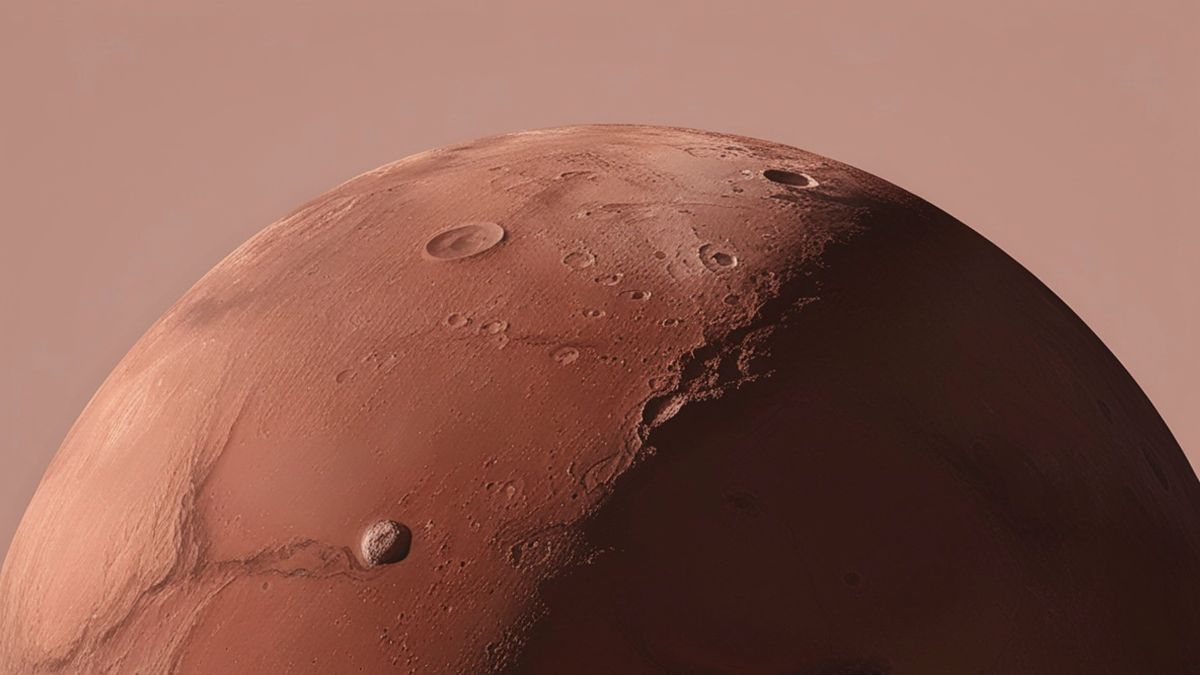
When we look up at the night sky, Mars is one of our closest and most interesting neighbors. It is often called the “Red Planet,” and for a long time, people have wondered if it is like Earth. We have sent many robotic explorers, like rovers and orbiters, to study it. These robots act as our eyes and ears, and they have taught us something very important: Mars is not a dead, boring rock. It has its own active and extreme weather system.
Just like Earth, Mars has seasons, winds, clouds, and even snow. But the weather on Mars is very different from what we experience. It is much more extreme and dangerous. The air is unbreathable, the temperatures are freezing, and giant dust storms can cover the entire planet. Understanding this weather is not just for curiosity. It is one of the most important jobs for scientists as we plan to one day send humans to walk on its surface.
So, what would it really be like to stand on Mars for a full day? What would you feel, see, and hear? The daily weather report from Mars is fascinating and shows just how different our two worlds are. The information sent back by rovers like Perseverance and Curiosity gives us a clear picture of a day in the life of the Red Planet. What is the first thing you would notice if you stepped outside on Mars?
How Cold Does It Really Get on Mars?
The very first thing you would notice on Mars is the extreme cold. Mars is much farther from the Sun than Earth, so it receives a lot less heat. The average temperature across the entire planet is incredibly low, around minus 81 degrees Fahrenheit (minus 63 degrees Celsius). This is far colder than even the coldest winters in Antarctica. But this average number does not tell the whole story. The weather on Mars is all about wild swings in temperature, especially between day and night.
If you were standing at the Martian equator during the summer, the weather at noon might feel surprisingly comfortable. On a sunny day, the temperature of the air just above the ground could reach a pleasant 70 degrees Fahrenheit (20 degrees Celsius). You might think you could take off your jacket. But this warmth is a trick. The air on Mars is extremely thin, so it cannot hold onto this heat. The moment the sun goes down, all that warmth escapes back into space almost instantly.
This leads to a shocking drop in temperature. That same spot that was 70 degrees Fahrenheit at noon will plummet to minus 100 degrees Fahrenheit (minus 73 degrees Celsius) or even colder on the very same night. This is a temperature swing of over 170 degrees every single day. On Earth, a big temperature swing in the desert might be 50 degrees, which we already find extreme. This daily deep freeze is a key feature of the Martian weather. The poles are even worse. During the long, dark polar winter, temperatures can drop to a stunning minus 225 degrees Fahrenheit (minus 153 degrees Celsius), which is cold enough to freeze carbon dioxide gas right out of the air.
What Is the Air on Mars Like?
The second thing you would notice is the air, or rather, the lack of it. The atmosphere on Mars is incredibly thin. The air pressure on the surface of Mars is only about one percent of the air pressure we feel on Earth at sea level. Imagine climbing a mountain on Earth. The higher you go, the thinner the air gets. Being on the surface of Mars is like being at an altitude of over 20 miles (32 kilometers) high on Earth, far higher than any airplane flies.
This thin air is also completely unbreathable for humans. The air we breathe on Earth is mostly nitrogen (78 percent) and oxygen (21 percent). The air on Mars is completely different. It is made of about 95 percent carbon dioxide. This is the gas we breathe out. There is almost no oxygen at all, less than one percent. If you were to step onto Mars without a spacesuit, you would not be able to breathe. The lack of oxygen and the extremely low pressure would be an immediate and fatal problem.
Because the pressure is so low, liquids cannot exist on the surface for long. If you poured a cup of water onto the Martian ground, it would not form a puddle. It would instantly boil and vaporize into a gas because there is not enough air pressure to hold it together as a liquid. This thin, carbon dioxide-rich air is the reason for many of Mars’s other weather features, including the extreme cold, the weak winds, and the unique color of its sky.
How Strong Are the Winds on Mars?
You may have seen movies where astronauts on Mars are caught in a powerful, howling wind storm that threatens to knock them over or destroy their equipment. In reality, the winds on Mars are not that strong in terms of force. While wind speeds on Mars can be very fast, sometimes reaching over 60 miles per hour (97 kilometers per hour), they would not feel like a hurricane. This is because the air is so thin. Wind is just moving air, and if there is very little air, it does not have much power or push.
Let’s think about it this way. A 60-mile-per-hour wind on Mars would feel on your skin like a gentle breeze of only 7 miles per hour (11 kilometers per hour) on Earth. It would not be strong enough to tip over a heavy rover or a human in a spacesuit. Astronauts would be able to walk against it without much trouble. The sounds on Mars would also be different. Because the air is thin and made of carbon dioxide, sounds would be much quieter and more muffled. You would not hear the wind “howl” in the same way it does on Earth.
However, this does not mean the wind is harmless. While the wind itself is weak, it is very good at one thing: picking up dust. The surface of Mars is covered in a layer of extremely fine, powdery dust, much finer than sand on Earth. The weak Martian winds are more than strong enough to lift this fine powder high into the atmosphere. This is what makes the wind on Mars dangerous. It does not knock things over with force; it sandblasts them with fine particles and creates massive, vision-blocking dust storms.
What Are Martian Dust Storms Like?
Mars is a very, very dusty place. That red color it is famous for comes from iron oxide, or rust, in this fine dust. Because the dust is so light and the wind is always blowing, dust storms are a major part of the daily and seasonal weather. Scientists have watched these storms for decades, and they come in several different sizes. The most common type is the “dust devil,” which we also have in deserts on Earth. These are small, swirling columns of air and dust, like a mini-tornado, that zip across the landscape. The rovers on Mars have photographed many of these.
Sometimes, these small storms grow much larger. A local or regional dust storm can cover an area the size of a continent, like North America or Europe. These large storms can last for several days or weeks, filling the air with a thick, red haze. This is a big problem for our robotic explorers, especially the ones that rely on solar power, like the InSight lander and the Opportunity rover. When a dust storm moves in, it blocks the sunlight, sometimes for weeks at a time. This can prevent the robots from recharging their batteries.
The most extreme weather event on Mars is the global dust storm. Every few years, something triggers a chain reaction, and these regional storms merge into one gigantic storm that covers the entire planet. The whole of Mars becomes wrapped in a single, dusty cloud. From space, you cannot even see the surface. These global storms can last for months. In 2018, one of these global storms ended the mission of the long-lasting Opportunity rover. The sky became so dark for so long that the rover could not recharge and was never heard from again.
Does It Rain or Snow on Mars?
With all this talk of cold and clouds, you might ask if it rains or snows on Mars. The answer is yes and no. It definitely does not rain on Mars. The planet is far too cold, and the air pressure is far too low for liquid water to be stable on the surface. Any liquid rain would either freeze or boil away instantly. So, you will never see a puddle or a river of water flowing on Mars today.
However, it does snow. But it is not always the same kind of snow we have on Earth. Mars actually has two different types of snow. The first type is regular water ice snow. Mars does have clouds, but they are not the big, puffy white clouds of Earth. They are very thin, wispy clouds, similar to cirrus clouds, made of tiny water ice crystals. Scientists using the Phoenix lander, which landed near the north pole, used a laser to study the atmosphere. They detected snow falling from these clouds. But the air is so thin and dry that this snow often vaporizes back into a gas before it even hits the ground.
The second type of snow is even more strange. It is snow made of carbon dioxide, which we know as “dry ice.” The Martian poles get so incredibly cold in the winter (below minus 193 degrees Fahrenheit or minus 125 degrees Celsius) that the carbon dioxide gas in the atmosphere itself freezes. This frozen CO2 forms clouds and then falls as dry ice snow. This snow builds up on the ground, creating the bright white seasonal polar ice caps we can see from Earth. Each winter, a thick layer of dry ice snow covers the poles, and each spring, it turns directly back into a gas, shrinking the cap again.
How Long Are the Seasons on Mars?
Like Earth, Mars has four distinct seasons: spring, summer, autumn, and winter. The reason for the seasons is also the same. Mars is tilted on its axis, just like Earth is. This tilt means that for part of the year, the northern half of the planet is tilted toward the Sun (experiencing spring and summer), while the southern half is tilted away (experiencing autumn and winter). Then, they switch. This tilt is what gives Mars its seasonal weather changes, like the growing and shrinking of the polar ice caps.
The big difference is the length of the seasons. A year on Earth is 365 days. A year on Mars is much longer because it is farther from the Sun and has a bigger orbit to complete. One Martian year lasts for 687 Earth days, which is almost twice as long as an Earth year. This means that each season on Mars lasts for about six months, not three. Imagine a winter or a summer that lasts for half a year.
The orbit of Mars around the Sun is also more of an oval shape, or elliptical, than Earth’s. This changes the length of the seasons. For example, in the northern hemisphere, spring is the longest season at 194 Martian days (or sols), while autumn is the shortest at only 142 sols. This oval-shaped orbit also makes the seasons in the southern hemisphere more extreme than in the north. When the southern hemisphere is tilted toward the Sun, Mars is also at its closest point to the Sun in its orbit. This means southern summers are shorter but much warmer and dustier than northern summers.
What Color Is the Sky on Mars?
One of the most famous questions about Mars is about the color of its sky. On Earth, our sky is blue during the day, and our sunsets are famously red and orange. On Mars, it is the exact opposite. During the day, the Martian sky is not blue. It is a pale, butterscotch or pinkish-red color. This is not because the air is different, but because of what is in the air. The atmosphere is full of that fine, red dust we talked about. These tiny dust particles scatter the sunlight in a way that makes the whole sky look red.
The truly beautiful sight happens at sunrise and sunset. As the Sun gets low on the horizon, the sky around it begins to glow with a faint blue or violet color. This is because the red dust scatters the red light away, but it allows the blue light to pass through more directly to our eyes when the Sun is at a low angle. Our rovers, like Curiosity and Perseverance, have sent back stunning, real photos of these blue sunsets.
It is a wonderful reminder of how alien this world truly is. On Earth, we see a blue sky with a red sunset. On Mars, you would stand on the cold, red sand, look up at a red sky, and watch a blue sun dip below the horizon. This sight, along in the silent, thin air, would be a clear sign that you are very, very far from home.
How Do We Know the Weather on Mars?
We know all of these amazing details about Martian weather because we have dedicated robotic weather reporters living on the surface. Our current rovers, NASA’s Perseverance and Curiosity, are not just geologists looking for rocks. They are also moving weather stations. The Perseverance rover, for example, is equipped with a sophisticated set of tools called MEDA (which stands for Mars Environmental Dynamics Analyzer). This system is the rover’s weather chief.
MEDA has sensors that measure the temperature of the air and the ground every single second. It has a wind sensor that measures wind speed and direction. It has sensors for humidity and air pressure. Most importantly, it has a special camera that studies the dust in the air. It measures the amount of dust, the size of the particles, and how they block the sunlight. This helps scientists create a daily weather report from Jezero Crater, where Perseverance is exploring.
We also have satellites orbiting Mars, like the Mars Reconnaissance Orbiter and MAVEN. These orbiters look down from above. They watch the huge dust storms form and move across the planet. They study the clouds and measure the temperature of the whole atmosphere. They can even see how the solar wind from the Sun affects the thin Martian air, which is a kind of “space weather.” By combining the data from the rovers on the ground with the observations from the orbiters in the sky, we can build a complete and detailed picture of the complex, cold, and dusty weather on Mars.
Conclusion
The weather on Mars is a story of extremes. It is a planet defined by its thin, unbreathable air and its bitter cold. A day on Mars can swing from a temperature that feels like a pleasant autumn afternoon to one colder than Antarctica, all between noon and midnight. It is a world where the wind is fast but gentle, yet it has enough power to kick up dust storms that can circle the entire globe. You would never see rain, but you could watch blue sunsets and see snow made of both water and dry ice.
Mars is not a simple, static red dot in the sky. It is a dynamic and active world with a complex climate all its own. Every day, our rovers send back a weather report that helps us understand this alien environment. This information is vital, as it teaches us not only about Mars but also about our own planet. And it is the key to one day allowing humans to safely step onto that cold, dusty surface. As we learn more, it makes us think: what other strange types of weather are waiting to be discovered on worlds even farther away?
FAQs – People Also Ask
Why is Mars called the Red Planet?
Mars is called the Red Planet because its surface is covered in a large amount of iron oxide. This is the same chemical compound as rust. This reddish rust is in the soil and the fine dust, and when it is kicked up into the atmosphere, it makes the entire planet look red from a distance.
Can humans ever live on Mars?
Humans cannot live on the surface of Mars without a lot of technology. We would need to live inside special, pressurized buildings called habitats. To go outside, we would need advanced spacesuits to provide oxygen, warmth, and protection from the low pressure and harmful space radiation.
What is a “sol” on Mars?
A “sol” is a Martian day. It is the amount of time it takes for Mars to rotate one time. A sol is slightly longer than an Earth day, lasting about 24 hours, 39 minutes, and 35 seconds. Scientists who work on Mars missions often use “sols” to keep track of time.
Does Mars have clouds?
Yes, Mars has clouds, but they are very different from Earth’s. They are thin, wispy clouds that look like cirrus clouds. They form high in the cold atmosphere and are made of tiny ice crystals, either from water ice or, in very cold areas, from frozen carbon dioxide (dry ice).
What is the gravity like on Mars?
The gravity on Mars is much weaker than on Earth. If you were standing on Mars, you would feel much lighter. The gravity is only about 38 percent as strong as Earth’s. This means if you weigh 100 pounds on Earth, you would only weigh 38 pounds on Mars, and you could jump much higher.
Why did Mars lose its atmosphere?
Scientists believe Mars used to have a thick, warm atmosphere billions of years ago. However, the planet’s core cooled down, and it lost its global magnetic field. Without this magnetic field to protect it, the solar wind from the Sun slowly stripped away most of the atmosphere into space.
What is the hottest it ever gets on Mars?
The hottest recorded air temperature on Mars is around 70 degrees Fahrenheit (20 degrees Celsius). This temperature is not common and only happens at the equator, in the middle of summer, and at noontime when the Sun is at its highest. The ground itself can get slightly warmer.
What are the polar ice caps on Mars made of?
The polar ice caps on Mars have two parts. The permanent, or residual, caps are made mostly of water ice, just like on Earth. These are covered by seasonal caps, which are a thick layer of carbon dioxide “dry ice” that forms as snow each winter and then disappears (sublimates) in the spring.
What would a 60 mph wind feel like on Mars?
A 60-mile-per-hour wind on Mars would feel very weak, like a light breeze of only 7 or 8 miles per hour on Earth. This is because the air on Mars is about 100 times thinner than Earth’s air, so the wind does not have much force or pressure, even when it moves fast.
Why are sunsets on Mars blue?
On Mars, the sky is reddish during the day because fine dust particles scatter red light. At sunset, the sunlight has to pass through even more of this thin, dusty air. The dust scatters the red light away, but it allows the blue light to pass through more directly, creating a blue glow around the setting Sun.