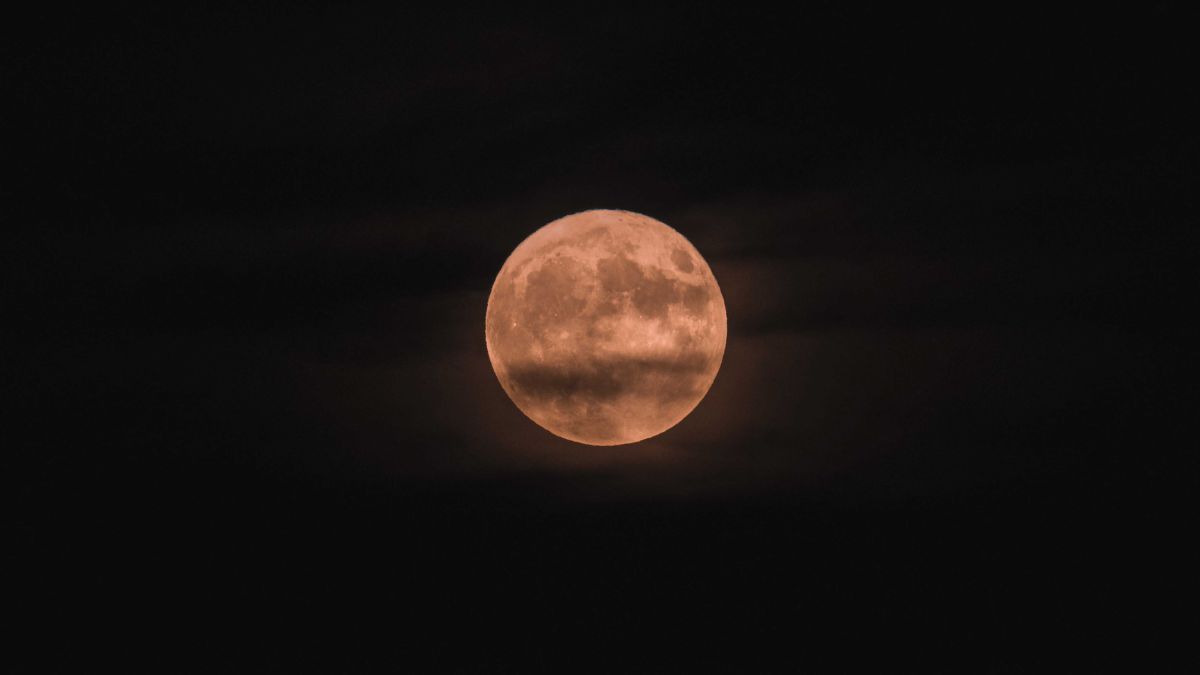
Our planet has a new, tiny companion on its long journey around the Sun. Astronomers recently announced the discovery of a small asteroid, named 2025 PN7, that is following Earth in a very special and unusual orbit. This discovery has caused a lot of excitement, with many people calling it a new “mini-moon.” It is a thrilling reminder that our solar system is a busy place, and we are still finding new neighbors right in our own backyard.
This new object is not a large, permanent moon like the one we see almost every night. Instead, it is a special type of object that scientists call a “quasi-satellite.” This means it is more of a temporary friend than a permanent partner. It does not orbit the Earth in the same way our main Moon does. Instead, it orbits the Sun, but its path is so similar to Earth’s that it stays close to us for a very long time, appearing to follow us around.
The discovery of 2025 PN7 gives scientists a wonderful new object to study. It helps us learn more about how our solar system works, how planets and asteroids interact, and what else might be hiding in the space near our planet. It is a fantastic puzzle for astronomers to solve. But what exactly is this new object, and how is it “orbiting” our planet?
What Is This New Object Named 2025 PN7?
The new object, 2025 PN7, is a small asteroid. When we say small, we mean it. Current estimates show it is only about 18 to 36 meters across. To put that in perspective, it is roughly the size of a large city bus or a small apartment building. This is tiny compared to our main Moon, which is over 3,400 kilometers wide. This object was first spotted in August 2025 by astronomers using the Pan-STARRS observatory in Hawaii. Pan-STARRS stands for Panoramic Survey Telescope and Rapid Response System, and its main job is to scan the sky every night, looking for moving objects like asteroids and comets.
What makes this discovery so interesting is that 2025 PN7 is not a new arrival. After finding it, scientists were able to calculate its orbit and look back at older images. They found that this little asteroid has likely been in this special orbit with Earth since the 1950s or 1960s. It has been our hidden companion for over 60 years, and we just found it. The reason it took so long to see is because it is very small and extremely faint. In astronomy, an object’s brightness is called its “magnitude,” and 2025 PN7 has a magnitude of 26, which is far too dim to be seen by anything except very large, professional telescopes.
Is 2025 PN7 Really a ‘Second Moon’?
This is the most important question, and the simple answer is no, it is not a true “second moon.” Our main Moon is gravitationally bound to the Earth. It orbits our planet because Earth’s gravity is the main force acting on it. This new object, 2025 PN7, is different. Its “boss” is the Sun. This asteroid is not captured by Earth’s gravity. Instead, it orbits the Sun. The special part is that its orbit takes almost exactly the same amount of time as Earth’s orbit: one year.
This is what scientists call a “quasi-satellite.” Because it has the same orbital period as Earth, it stays in our general neighborhood. It is like two cars on a giant, circular racetrack, both driving in the same direction at the same speed, but in slightly different lanes. They stay near each other for many laps, but they are not tied together. From our point of view on Earth, 2025 PN7 appears to trace a very complex, looping path around us. It looks like it is orbiting us, but it is actually just playing a long game of “follow the leader” with Earth as we both circle the Sun. This relationship is temporary, while our main Moon’s orbit is permanent.
What Is the Difference Between a Mini-Moon and a Quasi-Satellite?
This is a great question, as the terms are often mixed up. The title of this article calls 2025 PN7 a “mini-moon,” which is a popular term, but scientifically, it is a “quasi-satellite.” The difference is all about gravity and who is in charge. A quasi-satellite, like 2025 PN7, orbits the Sun. It is not captured by Earth’s gravity. It just happens to have an orbit that is very similar to Earth’s, which keeps it nearby for a long time—decades or even centuries. Think of it as a friend who lives in your neighborhood. Other examples of quasi-satellites include Kamoʻoalewa (also known as 2016 HO3) and 2023 FW13. These objects are in a stable, co-orbital dance with Earth.
A “true mini-moon,” on the other hand, is much rarer and more temporary. A true mini-moon is an asteroid that flies too close to Earth and is actually captured by our planet’s gravity. For a short time, it stops orbiting the Sun and starts orbiting Earth, just like our main Moon. These are also called “temporary satellites.” This capture is very unstable. After a few months, or maybe a few years, the gravitational pulls from the Sun and our main Moon will “steal” the mini-moon back, and it will be flung away from Earth to orbit the Sun again. A famous example was 2020 CD3, a car-sized asteroid that orbited Earth for about three years before it escaped in March 2020. Another was 2024 PT5, which was briefly captured for a few months in 2024. So, 2025 PN7 is a quasi-satellite (a long-term neighbor) and not a true mini-moon (a short-term captive).
How Long Will This New ‘Mini-Moon’ Stay With Us?
One of the most fascinating parts of the 2025 PN7 discovery is its orbital stability. As we learned, this object has probably been with us since the 1950s or 1960s. That is a very long time for such a small object to remain in this special orbital dance. Astronomers have run many computer simulations to predict its future path. These calculations show that 2025 PN7 will continue to be Earth’s quasi-satellite for several more decades. The current estimate is that it will remain in this co-orbital state with us until around the year 2083.
After 2083, its orbit will become more unstable. The constant, gentle tugs from Earth, the Moon, and other planets like Venus and Jupiter will slowly alter its path. Eventually, one of these gravitational nudges will push it out of this special 1-to-1 resonance with Earth. When that happens, it will drift away from our neighborhood and go back to being a normal near-Earth asteroid, orbiting the Sun on its own. This is a natural part of the life cycle for quasi-satellites. They are not permanent fixtures, but rather temporary companions that we are lucky to spot. Its long stay, however, gives scientists a great, extended opportunity to study it.
Does 2025 PN7 Pose Any Danger to Earth?
This is a question that naturally comes up whenever a new asteroid is found near our planet. The answer is a clear and simple no. The asteroid 2025 PN7 poses absolutely no danger to Earth. Scientists have very carefully mapped its orbit, both into the past and into the future. It is not on a collision course with our planet. In fact, it never gets very close to us at all, even by space standards. This quasi-satellite always stays millions of kilometers away from Earth.
To give you an idea, our main Moon orbits at an average distance of about 384,000 kilometers. This new object, 2025 PN7, stays much, much farther away than that. NASA and other space agencies around the world are very good at tracking these objects. They have a special program called the Planetary Defense Coordination Office, whose entire job is to find, track, and assess the risk of any near-Earth objects. 2025 PN7 has been studied, and it is classified as a “non-hazardous object.” It is purely an object of scientific curiosity and wonder, not a reason for any concern. We can all just enjoy the fact that we have this tiny, secret companion.
Why Are Scientists So Excited About This Discovery?
For scientists, 2025 PN7 is like finding a new laboratory floating in space right next door. The excitement is not about any threat, but about the unique chance to learn. First, it is a perfect object to study orbital dynamics. This object is in a delicate gravitational balance between the Sun and the Earth. Studying how its orbit changes over time helps astronomers test and improve their models of how gravity works in a complex, multi-body system. It is a real-life example of a very complex physics problem.
Second, it gives us a chance to study a near-Earth asteroid up close, relatively speaking. Because it stays in our neighborhood for decades, it is a much easier target to observe for a long time. Scientists can use powerful telescopes to study its light and try to figure out what it is made of. Is it a dark, rocky asteroid? Is it metallic? Does it spin, and if so, how fast? Some other quasi-satellites, like Kamoʻoalewa, are thought to be actual fragments that were blasted off our main Moon by an ancient impact. Scientists are very excited to find out if 2025 PN7 shares this origin, or if it is just a regular asteroid that wandered in from the asteroid belt between Mars and Jupiter. It is a new piece of our solar system’s puzzle.
Will We Find More Objects Like This in the Future?
Yes, absolutely. Astronomers are almost certain that 2025 PN7 is just the tip of the iceberg. We are entering a new golden age of astronomy, and our ability to find small, faint objects is getting better every year. Observatories like Pan-STARRS, which found this object, are constantly scanning the skies. But a new, incredibly powerful observatory is just beginning its mission and is expected to change everything. This is the Vera C. Rubin Observatory, located in Chile. This observatory has a massive camera, the size of a small car, that will conduct a ten-year survey of the entire southern sky.
This survey is called the Legacy Survey of Space and Time (LSST). The Rubin Observatory will take a picture of the entire sky every few nights. By comparing these pictures, it will be able to spot anything that moves or changes. It will create a “movie” of the night sky, revealing millions of new asteroids, comets, and other objects. Scientists predict that this observatory will find a large population of these quasi-satellites and temporary mini-moons. We may learn that Earth almost always has a few of these tiny companions, but they are constantly coming and going. The discovery of 2025 PN7 is just a preview of the amazing discoveries that are still to come.
Conclusion
The discovery of 2025 PN7 is a wonderful piece of science news. It shows us that even our own cosmic neighborhood is still full of surprises. While it is not a true “second moon,” this bus-sized quasi-satellite is a fascinating companion that has been secretly following Earth for over half a century. It is not a danger to us, but it is a fantastic opportunity for scientists to learn more about the complex gravitational dance of our solar system.
This new asteroid reminds us that the solar system is not a static, unchanging place. It is a dynamic, busy environment where objects are always moving and interacting. With new telescopes like the Vera C. Rubin Observatory coming online, we are standing on the edge of discovering many more of these hidden neighbors. What other small secrets do you think are hiding in the space right next to our planet?
FAQs – People Also Ask
What is the new mini-moon called?
The newly discovered object is an asteroid designated 2025 PN7. While many call it a “mini-moon,” scientists have classified it more specifically as a “quasi-satellite” of Earth.
How big is the new quasi-moon 2025 PN7?
It is a very small object, estimated to be between 18 and 36 meters in diameter. This is roughly the size of a large city bus or a small building.
Does Earth have two moons now?
No, Earth still has only one large, permanent, natural satellite: the Moon. The new object, 2025 PN7, is a small asteroid that is not gravitationally bound to Earth. It orbits the Sun in a path that keeps it near Earth temporarily.
Will 2025 PN7 hit the Earth?
No, 2025 PN7 is not on a collision course with Earth and poses no danger. Its orbit is well understood, and it always remains millions of kilometers away from our planet, much farther than our main Moon.
What is the difference between a moon and a quasi-moon?
A moon is a natural satellite that is gravitationally bound to and orbits a planet. A quasi-moon (or quasi-satellite) is an object that orbits the Sun, but its orbital period is so similar to a planet’s that it stays close to that planet for a long time.
How was 2025 PN7 discovered?
It was discovered in August 2025 by the Pan-STARRS (Panoramic Survey Telescope and Rapid Response System) observatory, which is located in Hawaii. Its mission is to scan the sky for moving objects like asteroids.
How long has 2025 PN7 been near Earth?
After discovering it, scientists calculated its orbit backward in time. They believe it has been in this special co-orbital path with Earth since the 1950s or 1960s, meaning it was our hidden neighbor for over 60 years.
What is Kamoʻoalewa?
Kamoʻoalewa (also known as 2016 HO3) is another famous quasi-satellite of Earth, discovered in 2016. It is one of the most stable quasi-satellites we know of, and some scientists believe it may be a fragment that was blasted off our main Moon.
What happened to the mini-moon 2020 CD3?
2020 CD3 was a “true mini-moon,” meaning it was temporarily captured by Earth’s gravity. It orbited our planet for about three years before its orbit became unstable and it escaped Earth’s gravity in March 2020 to orbit the Sun again.
Why can’t I see the new mini-moon?
The object 2025 PN7 is extremely small and very, very faint. It is far too dim to be seen with the naked eye or even a standard backyard telescope. It can only be detected by large, professional observatories with very sensitive cameras.