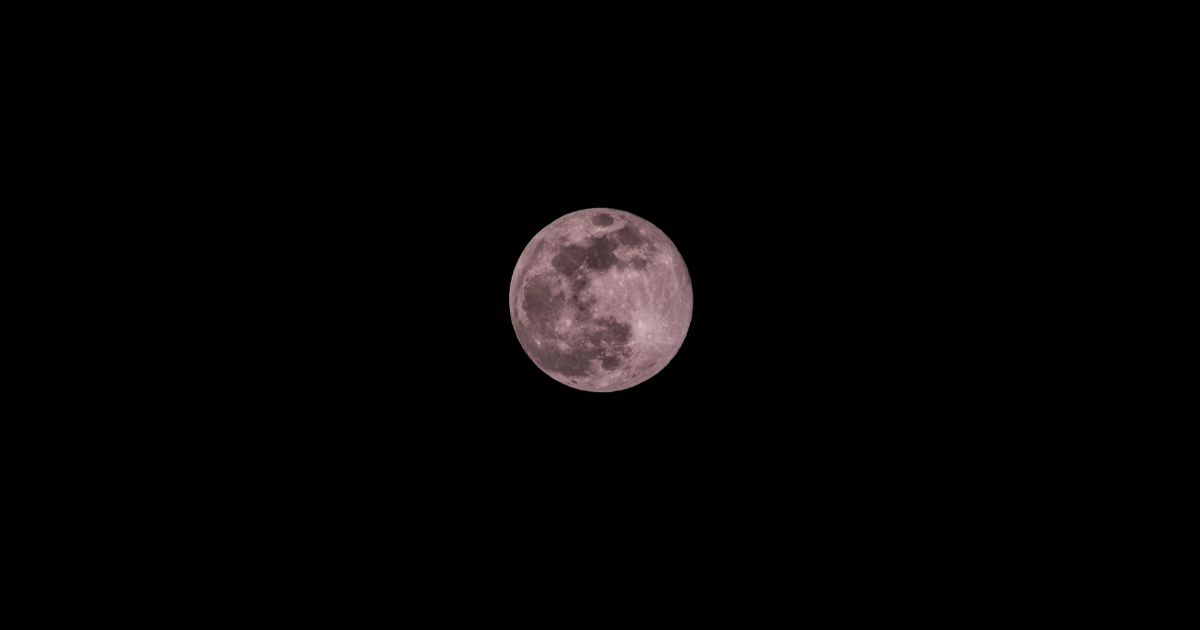
The Moon is the most familiar object in our night sky. It floats above us, changing its shape throughout the month, and has been a source of wonder for all of human history. For a very long time, people looked up and wondered where it came from. Because the Moon is so large compared to our planet, it is a very special case in our solar system. Most other moons are tiny compared to their host planets, but our Moon is more like a partner.
Scientists have spent centuries trying to solve this puzzle. They came up with several different ideas, but for a long time, none of them perfectly matched the evidence. It was only when astronauts finally went to the Moon and brought back pieces of it that we began to get the true story. The clues hidden in those lunar rocks pointed to a violent and dramatic birth, an event that changed our planet forever. This story explains many of the Moon’s biggest mysteries, like its strange composition and its relationship with Earth. So, what is the leading scientific story of how our closest neighbor in space came to be?
What Were the Main Ideas Before Our Current Theory?
Before we had rocks from the Moon, scientists had three main ideas, or theories, about how the Moon was formed. These were all clever guesses based on what they could observe from Earth. The first was called the “Fission Theory.” This idea suggested that the early Earth was spinning extremely fast, much faster than it does today. It supposedly spun so fast that a large blob of molten rock was flung off the surface and into space, which then cooled and became the Moon. This theory was popular for a while because it explained why the Moon is made of lighter rock, similar to Earth’s outer layers. However, the physics just does not work. For this to happen, the Earth would have had to be spinning at an impossible speed, with a day lasting only about two and a half hours. Furthermore, the Moon’s orbit around the Earth does not match the path it would have taken if it were simply thrown from the equator.
The second big idea was the “Capture Theory.” This theory proposed that the Moon was a large rogue object, like a giant asteroid or a small planet, that formed somewhere else in the solar system. It suggested that this object wandered too close to Earth and was caught, or “captured,” by our planet’s gravity. This idea explains why the Moon is different from Earth in some ways. The main problem with this theory is the sheer difficulty of it. Capturing an object as massive as the Moon is incredibly unlikely. A passing object is far more likely to either crash directly into the planet or get a gravitational “slingshot” that flings it off into deep space. To be captured perfectly into a stable orbit like the one our Moon has is almost a physical impossibility. Also, as we later learned, the Moon’s rocks are too similar to Earth’s for it to have come from a completely different part of the solar system.
The third and final old idea was the “Co-formation Theory,” also known as the “Accretion Theory.” This suggested that the Earth and Moon formed together at the same time, side by side, from the same original cloud of gas and dust. In this model, they would be like “sister” planets that grew near each other. This seems logical, but it failed to explain one critical difference: the core. Earth has a very large and dense iron core, which makes up about one-third of its total mass. The Moon, however, has a tiny iron core. If they had formed together from the same “recipe” of materials, they should have roughly the same proportion of iron. The Moon clearly does not, which meant this theory was also incomplete. All three of these ideas had good points, but none of them could explain all the facts.
What Is the Giant Impact Hypothesis?
After the Apollo missions brought back hundreds of pounds of moon rocks, scientists had real data to test. The rocks revealed that the old theories were wrong. A new idea was needed, one that could explain everything: the Moon’s small core, its similar “isotopic fingerprint” to Earth, and evidence that it was once extremely hot. In the 1970s, scientists proposed the “Giant Impact Hypothesis,” which is now the most widely accepted theory. This theory states that about 4.5 billion years ago, when our solar system was young and chaotic, the Earth did not have a moon. Our planet, then called a “proto-Earth,” was still growing. At that time, another planet, about the size of Mars, was on a collision course with ours.
Scientists have given this Mars-sized planet a name: Theia. Theia, named after the Greek titan who was the mother of the moon goddess Selene, did not hit the Earth head-on. Instead, it struck the young Earth at a glancing angle. This colossal crash was the most violent event in our planet’s history. The impact was so powerful that it completely destroyed Theia. Most of Theia’s dense iron core sank into the Earth, merging with our own core and making it larger. At the same time, the impact blasted an enormous amount of material—mostly the lighter, rocky outer layers (the mantle) of both Earth and Theia—into orbit around our planet. This debris was superheated, forming a massive, spinning ring of molten rock and vapor.
This ring of debris did not just stay there. Over time, gravity went to work. The countless pieces of rock and vapor began to clump together. Smaller pieces merged into larger ones, and these larger ones attracted more debris. This process, called accretion, may have happened very quickly. Some computer models suggest that the main body of our Moon could have formed from this debris ring in as little as a few years or decades, though others suggest it may have taken thousands of years. This new Moon was born from the wreckage of the impact, a “child” of both the early Earth and the lost planet Theia. This single, dramatic event explains all the clues that the other theories could not.
What Evidence Supports This Giant Impact?
The Giant Impact Hypothesis is not just a good story; it is supported by multiple lines of strong scientific evidence found in the moon rocks themselves. The most important clue is what scientists call “isotopic signatures.” Isotopes are different versions of the same element. For example, there are different kindsof oxygen atoms. The precise mixture, or “fingerprint,” of these isotopes is different in different parts of the solar system. Rocks from Mars have one fingerprint, and meteorites from the asteroid belt have another. The stunning discovery from the Apollo samples was that the oxygen isotopes on the Moon are almost identical to those on Earth. This “isotopic twin” signature is powerful proof that the Moon must be made, at least in large part, from the same parent material as Earth’s mantle. This perfectly matches the giant impact model, where the debris that formed the Moon came mostly from Earth’s own mantle.
Another huge piece of evidence is the Moon’s core, or lack thereof. We know the Moon has a tiny iron core, much smaller than it should be for an object its size. The Giant Impact Hypothesis explains this perfectly. When Theia struck Earth, the collision was so intense that the heavy iron from both planets’ cores merged. Theia’s core sank into Earth. The material blasted into space to form the Moon was mostly the lighter, rocky mantle, which has very little iron. This is exactly what we see. If the Moon had been “captured” or had “formed with” Earth, it would have a much larger iron core, similar to Earth’s proportions.
Finally, there is the evidence of extreme heat. The moon rocks brought back by the astronauts show clear signs of having been melted at incredibly high temperatures. The rocks are also “anhydrous,” which is a scientific way of saying they are extremely dry and lack volatile elements—things like water, sodium, and zinc, which easily turn into gas when heated. A colossal impact, energetic enough to blast a planet apart, would have generated an unimaginable amountof heat. This heat would have created a “magma ocean,” meaning the entire surface of the newly formed Moon was a deep ocean of molten rock. This extreme heat would have “baked off” and vaporized all the water and other volatile elements, explaining why the Moon’s rocks are so dry today.
What Was This Planet Named Theia?
The planet Theia is the “villain” of the Moon’s origin story, but it is also a critical part of our own planet’s formation. While Theia itself is gone, scientists can use computer simulations to understand what it was probably like. Based on the physics needed to create our Moon, models show that Theia was most likely about the size of Mars. This is significant because it is large enough to have “differentiated,” meaning it was a proper planet with its own layers. Like Earth, it would have had a dense iron core and a lighter rocky mantle around it. It was not just a simple asteroid; it was a fellow protoplanet that was growing in the same neighborhood as Earth.
So where did Theia come from? The most popular idea is that it formed in a stable orbit near Earth. In our solar system, there are special locations called “Lagrange points” where the gravity of the Sun and a planet (like Earth) balance out. An object in one of these spots can stay there for a long time. It is possible that Theia formed in one of Earth’s Lagrange points, either ahead of or behind Earth in the same orbit. It would have been a “sister” planet for millions of years. However, as planets grow, they “clear” their orbits. Theia likely grew large enough that its orbit became unstable, possibly due to the gravitational pull of other planets like Jupiter or Venus. It began to wobble, straying from its stable point until it was set on the catastrophic collision course with Earth that would eventually form the Moon.
What happened to Theia after the impact? It was completely destroyed. However, a huge part of it is still with us. As the simulations show, the impact was so massive that Theia’s dense iron core was absorbed by Earth. It sank through our planet’s molten mantle and merged with our own core. This means that a large portion of Earth’s core today is actually the core of the planet Theia. The rest of Theia, its mantle, was either vaporized and mixed with Earth’s mantle to form the Moon, or it was absorbed directly into Earth’s own mantle. So, in a very real way, Theia did not just disappear; it became a fundamental part of both the Earth and the Moon.
What Happened Immediately After the Impact?
The moments, days, and years after the giant impact would have been a truly apocalyptic scene. Immediately after Theia struck, the young Earth would have been unrecognizable. The energy released was thousands of times greater than all the nuclear weapons on Earth combined. This energy would have melted the entire surface of our planet, turning it into a glowing, global ocean of magma. Earth would have been hotter than the surface of the Sun for a short time. A vast cloud of vaporized rock, the remains of Theia’s mantle and a large part of Earth’s, would have expanded into space. This material was not just a cloud; it formed a rapidly spinning, dense disk of debris around Earth’s equator. Our planet would have briefly looked like Saturn, but with a ring made of molten rock.
This debris ring was where the Moon was born. It was not a slow, gentle process. Because the disk was so dense and hot, gravity would have taken hold very quickly. Computer simulations run in 2025 show that this phase might have been shockingly fast. Instead of taking many thousands of years for the debris to slowly clump together, the Moon may have “accreted” in a very short timescale, possibly in just a few years or, at most, a few centuries. A large “moonlet” would have formed quickly, and its gravity would have rapidly pulled in the rest of the debris from the ring.
As the Moon pulled itself together, it too was a molten world. The heat from all those collisions as it formed created its own magma ocean. So, for a time, Earth and the Moon were two glowing balls of molten rock, orbiting each other in the darkness of space. As the Moon’s magma ocean slowly cooled over millions of years, the lighter materials floated to the top and solidified, forming the pale, light-colored crust we see today as the lunar highlands. The heavier materials sank, which is why the Moon’s surface composition is different from its interior. This “magma ocean” phase is a critical part of the theory and is directly supported by the composition of the rocks collected by the Apollo astronauts.
How Did the New Moon Change the Early Earth?
The creation of the Moon was not just a side story; it fundamentally changed Earth and may be one of the key reasons life was able to take hold here. One of the most immediate effects was the creation of powerful tides. When the Moon first formed, it was much, much closer to Earth—perhaps ten to fifteen times closer than it is today. A large moon so close would exert an enormous gravitational pull. The Earth was also spinning much faster, with a day lasting perhaps only five or six hours. This combination of a fast spin and a close, large moon would have created monstrous tides. The ocean tides would not have been a few feet high, but possibly miles high. These massive tides would have washed over the planet’s early continents, mixing and churning the water and chemicals in the primordial oceans, creating a rich “soup” that many scientists believe was the perfect environment for the first living cells to emerge.
Another critical effect is stability. Before the Moon, the young Earth would have wobbled on its axis quite a bit. Its tilt (which gives us our seasons) could have swung wildly over long periods, perhaps tipping over so far that the poles pointed at the Sun. This would create extreme climate changes, with blistering heat followed by deep ice ages, making it very difficult for complex life to evolve. The Moon’s gravity acts as a stabilizer. It “grabs” onto Earth’s equatorial bulge and holds our planet’s tilt steady. For billions of years, the Moon has kept Earth tilted at a stable 23.5 degrees. This stability is what gives us the predictable, regular seasons that have allowed life to flourish and evolve over eons.
Finally, the Moon is responsible for the length of our day. That early, five-hour day has slowly been getting longer, and the Moon is the reason why. The Moon’s gravity pulls on Earth’s oceans, creating the tidal bulges. As Earth spins, it tries to drag these bulges along with it, but the Moon’s gravity holds them back. This interaction acts like a brake, creating a tiny amount of friction that has slowly, over billions of years, slowed down Earth’s rotation. This process is still happening today. The Moon is acting as a brake on Earth, and as a result, our day is getting longer by about two milliseconds every century. As the Earth slows down, that energy is transferred to the Moon, which is pushed into a slightly higher orbit, moving about 1.5 inches away from us every year.
Are There Any New Ideas or Problems with This Theory?
The Giant Impact Hypothesis is the champion of lunar formation theories, but science is never completely settled. As our technology and computer models get better, scientists can test the theory in more detail. In recent years, they have found one major “problem,” or rather, a puzzle that the original model does not solve perfectly. This is often called the “isotopic crisis.” As we discussed, the Moon and Earth are isotopic twins, which suggests the Moon is made mostly of Earth’s mantle. However, the original computer simulations of a glancing blow from Theia showed that the debris disk should have been made mostly of material from Theia, not from Earth. If Theia formed in a different part of the solar system, it should have a different isotopic fingerprint. So why is the Moon an identical twin to Earth?
This puzzle has led to new, refined versions of the giant impact. One of the most exciting new ideas is the “Synestia” model. This model, developed with much more powerful computer simulations, suggests the impact was even more violent than we thought. It proposes that the collision was so energetic that it did not just create a debris disk; it completely vaporized both the proto-Earth and Theia. The two planets were destroyed and merged into a single, massive, spinning donut-shaped object made of vaporized rock. This theoretical object is called a “synestia.” In this model, the Earth and Moon would have then condensed and re-formed inside this hot, rapidly spinning cloud. Because they both formed from the same well-mixed cloud of vapor, it would perfectly explain why their isotopic fingerprints are identical.
Another alternative idea is the “multiple-impact theory.” This suggests that it was not one single giant impact from a Mars-sized object. Instead, the early Earth may have been hit by a series of smaller (but still huge) impacts. Each of these impacts would have blasted off a stream of debris, which could have formed a small “moonlet.” Over millions of years, these several moonlets would have merged to form the one large Moon we have today. This model also helps explain the isotopic similarity, as a series of smaller impacts would be more likely to launch Earth-based material into orbit. These new ideas do not replace the Giant Impact theory, but rather they refine it, trying to get the details just right to match the incredible evidence we have.
Conclusion
The story of the Moon’s formation is a powerful reminder that our solar system was once a very violent and chaotic place. The old, simpler ideas of the Moon being a captured sibling or a piece flung from a spinning Earth have been replaced by a much more dramatic and well-supported theory. The evidence, written in the rocks brought back by astronauts, tells a story of a catastrophic collision between our young planet and a Mars-sized visitor named Theia. This single event, the Giant Impact, explains all the key mysteries: the Moon’s small core, its molten past, and its “twin” chemical signature.
This impact did not just give us a beautiful light in the night sky. It fundamentally shaped our world, giving us the stable seasons, the 24-hour day, and the ocean tides that may have helped spark life. While scientists today use powerful computers to debate the exact physics—whether it was one giant smash or a series of smaller ones—the core idea remains. The Moon is not a visitor; it is a piece of our own planet, born from the most violent collision in Earth’s history. When you look up at the Moon, what does it make you think, knowing it is a lost piece of our own world?
FAQs – People Also Ask
How old is the Moon?
The Moon is believed to have formed about 4.5 billion years ago, just a short time after the Earth and the rest of the solar system began to form. This makes it only slightly younger than the Earth itself.
What is the “Giant Impact Hypothesis” in simple terms?
It is the theory that a planet about the size of Mars, called Theia, crashed into the very young Earth. The crash blasted a huge amount of rocky material into space, which then clumped together to form our Moon.
Why did the old Moon formation theories fail?
The old theories (Fission, Capture, and Co-formation) failed because they could not explain all the evidence. For example, they could not explain why the Moon has a tiny iron core but shares an identical isotopic “fingerprint” with Earth’s mantle.
What are lunar isotopes and why do they matter?
Isotopes are different versions of elements, like oxygen. Their specific mixture is a “fingerprint” that tells scientists where an object formed. The Moon’s fingerprint is identical to Earth’s, which proves they are made of the same parent material.
Did the Moon have a magma ocean?
Yes, the evidence from Apollo moon rocks shows the Moon was once so hot that its entire surface was a deep ocean of molten rock. This was caused by the immense heat generated during its formation from the giant impact.
How does the Moon stabilize Earth’s tilt?
The Moon’s gravity pulls on Earth and holds it in place, preventing our planet’s axis from wobbling wildly. This steady tilt, at about 23.5 degrees, is what gives us stable and predictable seasons.
Is the Moon moving away from Earth?
Yes, it is. The Moon is slowly moving away from Earth at a rate of about 1.5 inches (3.8 centimeters) per year. This is caused by the same gravitational interactions that are slowly making Earth’s days longer.
What is a “synestia” in astronomy?
A synestia is a theoretical, short-lived object that is a giant, spinning donut of hot, vaporized rock. Some new models suggest the giant impact was so big it turned both Earth and Theia into a synestia, and the Moon then condensed from this cloud.
Could Earth have had two moons at some point?
It is possible. Some theories suggest the giant impact could have created two moons from the debris ring. The smaller moon might have eventually crashed into the larger one, which could explain why the two sides of the Moon are so different.
How did the Apollo missions help understand the Moon’s origin?
The Apollo astronauts brought back over 800 pounds of moon rocks. By studying the chemistry, minerals, and isotopes of these rocks, scientists were able to prove the old theories wrong and gather the key evidence for the Giant Impact Hypothesis.