Is There an Ocean Inside Europa?
Is There an Ocean Inside Europa?

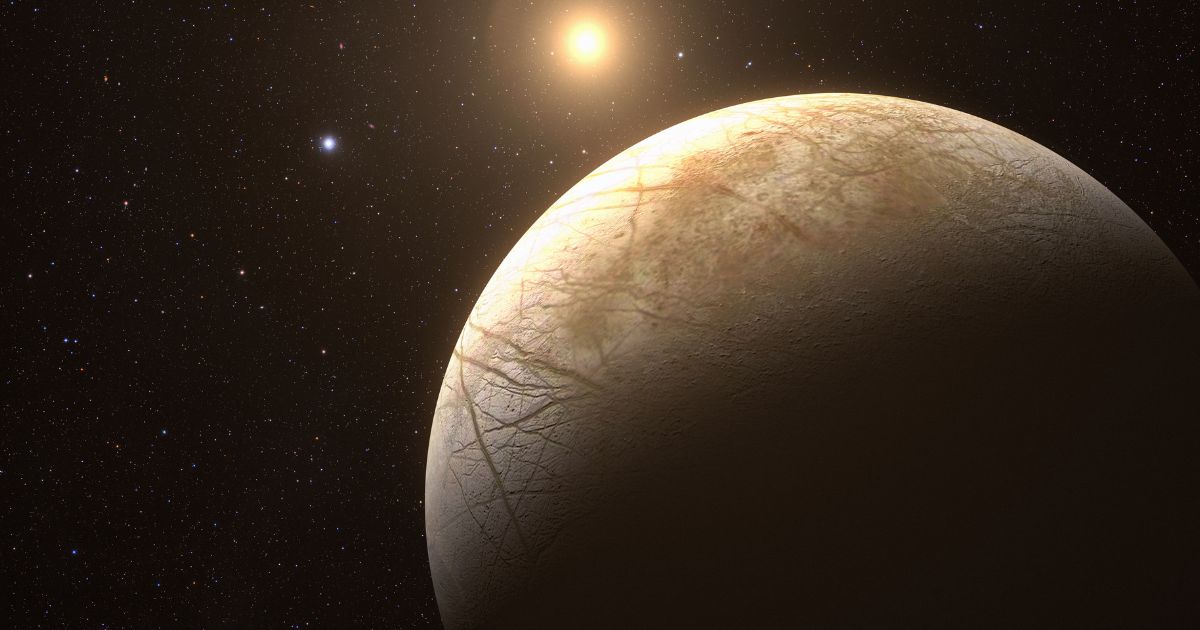
In the cold, dark, outer reaches of our solar system, orbiting the giant planet Jupiter, is a small, bright moon called Europa. At a glance, it looks like a smooth, white billiard ball, covered in long, dark cracks. But for decades, scientists have looked at this icy world and become more and more convinced that … Read more
Do ‘Micro’ Black Holes Exist?

Do 'Micro' Black Holes Exist?

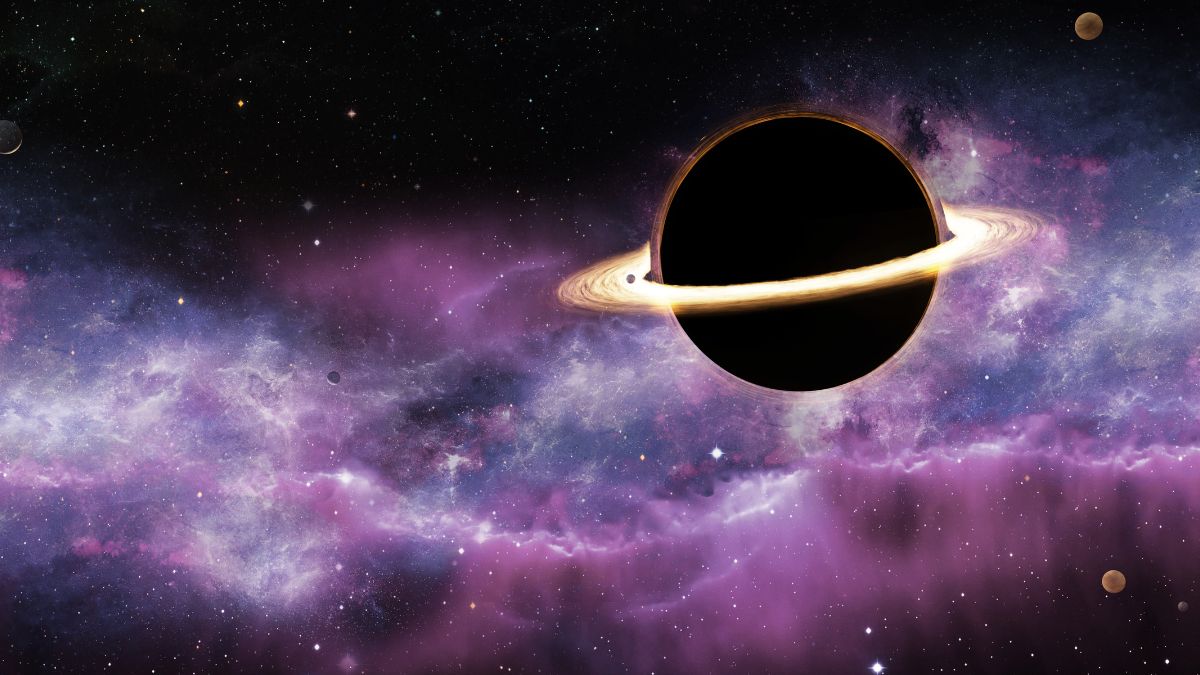
The terms micro black hole and primordial black hole (PBH) are often used in similar contexts, but it is helpful to know the difference. A primordial black hole is defined by when it formed: in the first second of the universe’s existence, before stars and galaxies even existed. These PBHs could have a huge range … Read more

Did Venus Ever Have Oceans?

Did Venus Ever Have Oceans?

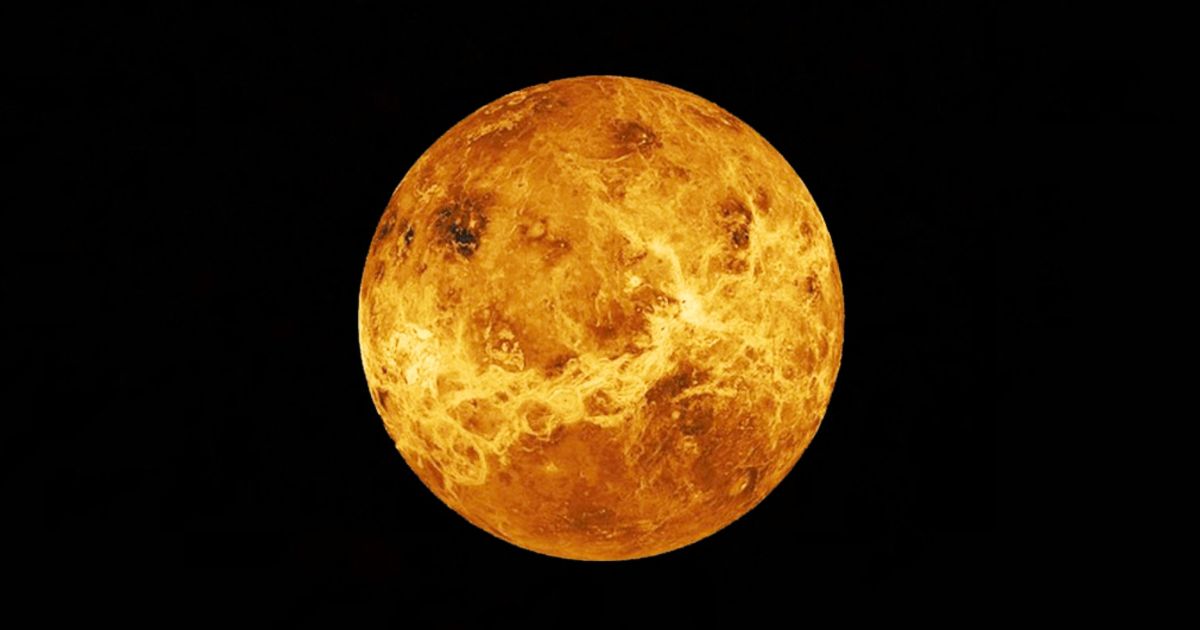
When we look at our solar system, Earth stands out as a beautiful blue marble, covered in water. Its neighbor, Venus, is a very different place. Often called Earth’s “twin” because it is a similar size, Venus today is a scorching, toxic world. It is the hottest planet in our solar system, with a thick, … Read more

Why Is Mercury’s Core So Huge?

Why Is Mercury's Core So Huge?

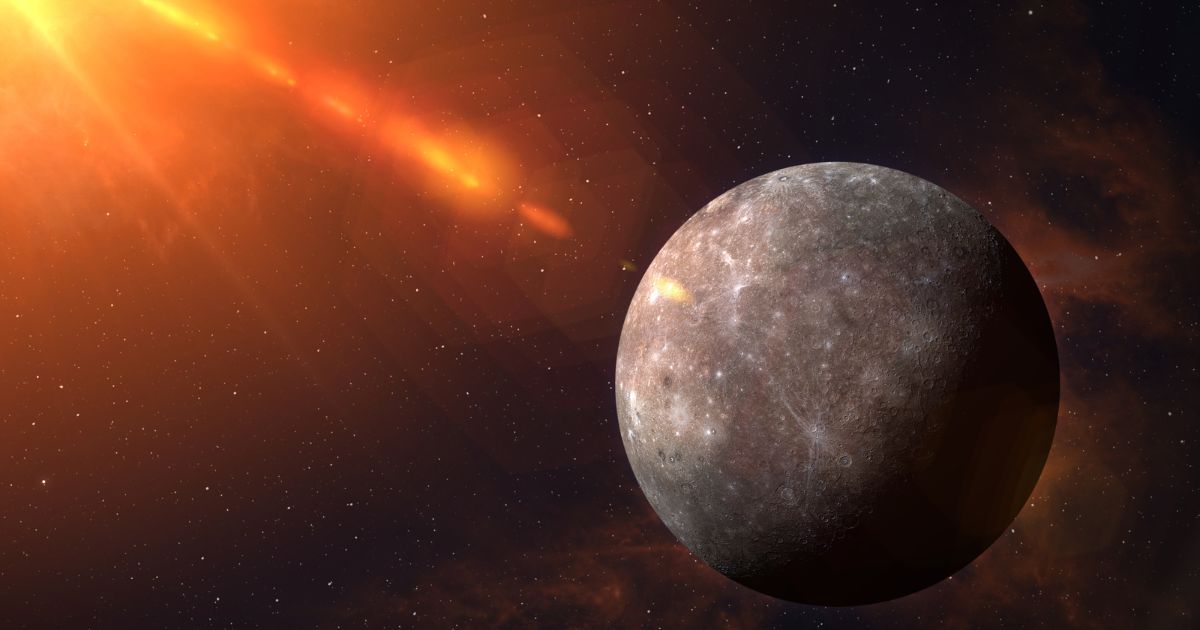
When we look at our solar system, we see a family of planets, each with its own personality. We have the giant, gassy Jupiter, the ringed beauty Saturn, and our own blue, watery Earth. Then there is Mercury. It is the smallest planet in the solar system, not much bigger than Earth’s Moon. It is … Read more

How Do ‘Stellar’ Black Holes Form?

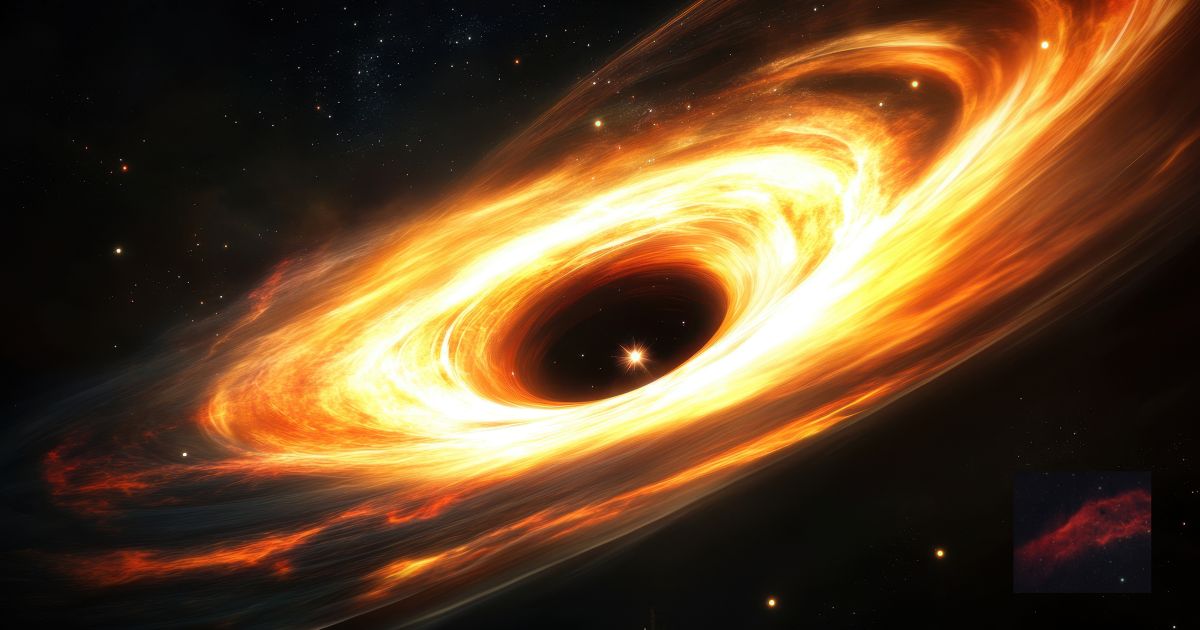
Black holes are some of the strangest and most powerful things in the universe. They are regions in space where gravity is so strong that nothing, not even light, can escape once it crosses a certain boundary. This might sound like something from a science fiction movie, but these cosmic vacuum cleaners are a very real part of our galaxy. There are a few different types of black holes, and the ones we are focusing on are called stellar black holes. The name gives us a big clue about where they come from. The word "stellar" means "relating to a star," and these are the kind of black holes that are born from the dramatic death of a massive star. They are like the cosmic leftovers of a star that lived a long, bright, and ultimately explosive life. Understanding their formation means following a star’s journey from its bright beginning to its final, crushing end. It all comes down to a battle between two immense forces: the star’s outward pressure from its nuclear burning and the star’s inward squeeze from its own immense gravity. As long as these two forces are perfectly balanced, the star lives happily. But what happens when the star runs out of fuel and gravity finally wins the fight? What Is the Life Cycle of a Massive Star? Stars, including the massive ones that become black holes, begin their lives as huge clouds of gas and dust called nebulae. Gravity pulls this loose material together, causing it to spin, heat up, and eventually form a hot, dense core. Once the core is hot enough, nuclear fusion begins, which is the process of smashing lighter atoms (mostly hydrogen) into heavier ones (like helium) to create enormous amounts of energy. This is what makes a star shine brightly for millions or even billions of years. Stars spend most of their existence in this stable phase, known as the Main Sequence. However, the life of a massive star is much shorter and more dramatic than a small star like our Sun. A massive star burns through its hydrogen fuel incredibly fast. Once the core's hydrogen is gone, gravity causes the core to shrink and heat up again, forcing the star to start fusing the heavier element, helium, into carbon, and then carbon into even heavier elements. This process is like a chain reaction, creating layers inside the star that fuse different elements. The star swells up into a brilliant Red Supergiant, much larger than its original size. The core keeps getting hotter and denser, fusing elements all the way up to iron. This element, iron, is the key turning point because, unlike all the elements before it, fusing iron does not release energy—it absorbs it. This means the star loses its central source of outward pressure. Why Is Iron the Death Knell for a Star's Core? For all the elements a star fuses up to iron, the process generates enough heat and pressure to push back against the star’s powerful gravity, keeping the star stable and shining. When the core is finally made of iron, this balancing act breaks down completely. Fusion stops because combining iron atoms requires more energy than it releases. Suddenly, there is no longer a powerful, outward-pushing force to counteract the overwhelming inward pull of gravity from the star's immense mass. In less than a second, the iron core begins a catastrophic and unstoppable gravitational collapse. Imagine something a million times the mass of the Earth suddenly falling in on itself. The core is compressed to unimaginable densities, and the temperature soars to over 100 billion degrees. It is this moment of crisis, when gravity overwhelms all other forces, that sets the stage for the most spectacular event in the universe and the birth of a black hole. The core collapses so quickly that it creates a gigantic shock wave that rips through the star's outer layers, blowing them off into space in a tremendous explosion. What Happens When a Massive Star Explodes? The explosion that marks the end of a very massive star's life is called a supernova. It is one of the most violent and energetic events known in space, capable of briefly shining brighter than an entire galaxy. When the star's core collapses, it crashes into itself and then bounces back, sending a massive shock wave outward. This wave is what violently throws the star's outer material, which contains all the elements created during its life, out into space. A supernova is not just a dazzling light show; it is an essential part of cosmic chemistry. It is during this explosion that many of the very heaviest elements in the universe—like gold, silver, and uranium—are created and scattered. The debris forms a cloud of hot gas and dust called a supernova remnant. This scattered material will eventually mix with other cosmic clouds, creating the building blocks for new stars, planets, and even life itself, which is why we often say we are made of "stardust." But what remains at the very center of that explosion decides the star's ultimate fate. What Determines If a Star Becomes a Neutron Star or a Black Hole? After the supernova explosion, the core that caused all the chaos remains. Its final destiny depends entirely on how much mass it still holds. This remnant mass must be compared to a critical limit known as the Tolman-Oppenheimer-Volkoff limit (often simplified to the TOV limit). If the core's remaining mass is relatively small—say, between about 1.4 and 3 times the mass of our Sun—the collapse is stopped by a force called neutron degeneracy pressure. This pressure comes from the neutrons that are packed so tightly together that they resist further compression. The result is an incredibly dense object called a neutron star. A neutron star is so dense that a teaspoon of its material would weigh billions of tons. However, if the core's remaining mass is larger than the TOV limit, typically around three times the mass of our Sun or more, then even the strong resistance of the tightly-packed neutrons is not enough to stop the crushing force of gravity. How Does Gravity Finally Create a Stellar Black Hole? When the core's mass is too high—over that critical TOV limit—the runaway collapse continues past the point of forming a neutron star. There is simply no known physical force strong enough to stop the self-crushing power of its own gravity. The core shrinks smaller and smaller, concentrating all that huge mass into an unbelievably tiny point. This extreme compression creates a stellar black hole. The core's matter is squeezed into a singularity—a point of zero volume and infinite density at the black hole's center. Around this point, a boundary forms called the event horizon. The event horizon is the point of no return. Once anything, even a beam of light, crosses this boundary, it is trapped forever by the black hole's overwhelming gravity. The black hole is not a void that "sucks" things in; rather, it is an object with such immense gravity that everything nearby simply falls into it, just as we fall toward the Earth. What Are Some Key Features of a Stellar Black Hole? Stellar black holes are relatively small compared to other black hole types, but they are still fantastically massive. Their size is often measured by the diameter of their event horizon, which is known as the Schwarzschild radius. A typical stellar black hole might be about 10 to 20 times the mass of the Sun, but its event horizon would only be about 60 to 120 kilometers (37 to 75 miles) across—roughly the size of a city! These black holes are invisible because no light can escape them, but scientists find them by observing the way their powerful gravity affects nearby objects. When a stellar black hole is part of a two-star system (a binary system) and pulls gas from its companion star, that gas heats up to millions of degrees as it spirals into the black hole. This superheated gas then emits bright X-rays, which telescopes can detect, confirming the black hole's presence. These are the most common type of black holes in our Milky Way galaxy, and astronomers estimate there could be millions of them. How Does a Stellar Black Hole Affect the Space Around It? A stellar black hole does not wander through the universe gobbling up everything in its path. Its gravitational pull on distant objects is actually no stronger than the star that created it would have been. If the Sun suddenly turned into a stellar black hole, the Earth would not be sucked in; it would simply continue to orbit the black hole just as it orbits the Sun now, because the mass would be the same. The difference is only felt when you get very, very close. The black hole's effect is most dramatic near the event horizon. This boundary warps space and time itself, an effect predicted by Albert Einstein’s theory of General Relativity. This warping means that any gas or dust that falls toward it moves faster and faster, forming a spinning disk called an accretion disk. This disk generates so much friction and heat that it glows brightly in X-ray and other light, making the black hole's presence known to astronomers millions of light-years away. In this way, these incredibly dense objects serve as cosmic lighthouses, helping us understand the extreme physics of the universe. A stellar black hole is the spectacular finale of a star at least three times more massive than the Sun. It begins with the star’s massive bulk, moves through the quick consumption of its nuclear fuel, and ends with the catastrophic collapse of its iron core in a supernova explosion. What remains is a compact object where gravity has reached its ultimate, unstoppable extreme, creating the event horizon and the singularity. These objects are the dense, invisible proof that stars, despite their bright lives, can ultimately be overwhelmed by their own gravity. They may seem mysterious, but they are a fundamental part of the cycle of matter and energy that governs the entire cosmos. What other kinds of cosmic violence might lead to the creation of the universe's most extreme objects? FAQs – People Also Ask How much bigger than the Sun does a star need to be to form a stellar black hole? A star generally needs to be at least 20 to 25 times the mass of our Sun during its main life to end up as a stellar black hole. Stars that are less massive, but still large (like 8 to 20 times the mass of the Sun), will typically end their lives as a neutron star after going supernova, because their core remnants are too small to overcome the resistance of neutron degeneracy pressure. The very largest stars that form black holes use up their fuel at an incredibly high rate, leading to their dramatic and explosive end. Can our Sun ever turn into a black hole? No, our Sun does not have nearly enough mass to ever become a black hole. When the Sun reaches the end of its life in about five billion years, it will first swell up into a red giant, and then its outer layers will drift away to form a planetary nebula. The core that is left behind will collapse into a dense, dim object called a white dwarf. The Sun's mass is far below the critical limit needed for the full gravitational collapse required to create a neutron star or a black hole. What is the difference between a stellar black hole and a supermassive black hole? The main difference is their size and how they form. A stellar black hole is relatively small, with a mass usually between about 3 and a few tens of times the mass of the Sun, and it forms from the direct death of a single massive star. A supermassive black hole, on the other hand, is gigantic, containing the mass of millions or even billions of Suns. These are found at the centers of almost all large galaxies, including our own Milky Way, and scientists are still working to understand all the exact ways they grow so massive over cosmic time. How do scientists know black holes exist if they are invisible? Scientists cannot see a black hole directly because its gravity prevents light from escaping, but they observe them by watching their extreme gravitational effects on nearby matter. They look for the X-rays that are emitted when a black hole pulls gas from a nearby star, heating the gas to millions of degrees in a swirling accretion disk. They can also track the unusual motions of stars that are orbiting an unseen, incredibly massive object, which strongly suggests a black hole is there. What is the event horizon of a black hole? The event horizon is the boundary surrounding a black hole, often called the point of no return. It is not a physical surface, but rather a theoretical limit in space. If anything, whether it is light, a spaceship, or a particle of dust, crosses this invisible line, it will be pulled toward the center of the black hole and can never escape, no matter how fast it travels. Outside the event horizon, escape is still possible, but inside, the force of gravity is simply too strong. How big is a stellar black hole compared to a planet? A stellar black hole has a physical boundary, the event horizon, that is actually quite small. A black hole that has a mass ten times that of the Sun would have an event horizon only about 60 kilometers (37 miles) in diameter. This is much smaller than any planet in our solar system; for example, the Earth has a diameter of about 12,742 kilometers. The black hole's immense power comes from all that mass being squeezed into such a tiny space. Can a black hole move and wander through space? Yes, black holes can and do move through space, just like stars and planets. When a black hole is formed in a supernova, the explosion itself is often slightly uneven, giving the newly-formed black hole a powerful "kick" that sends it speeding away. These are sometimes called "rogue" black holes, and they travel through the galaxy. Most black holes, however, are found in binary systems with other stars or orbiting the center of their host galaxy, following the overall flow of cosmic movement. What is the singularity inside a black hole? The singularity is the infinitely dense point at the very center of a black hole. According to our current understanding of physics, all the mass of the star that collapsed to form the black hole is crushed into this single, tiny point of zero volume. It is a region where the laws of physics, as we currently understand them, completely break down, and it is hidden from the rest of the universe by the protective veil of the event horizon. If a black hole is so strong, why don't they suck up everything in the universe? Black holes only have a strong effect when objects get very close to them. Their gravity works just like the gravity of any normal star or planet—it gets weaker with distance. The overwhelming gravity is only experienced near the event horizon. From far away, a black hole with a certain mass pulls on objects with exactly the same strength as a normal star of that same mass would. The vast distances between objects in space mean that black holes are very unlikely to randomly "suck up" stars or planets. Do stellar black holes eventually die or disappear? In theory, black holes are not eternal. A scientist named Stephen Hawking proposed that black holes can slowly lose mass and energy over time through a process called Hawking radiation. This is an incredibly slow process for stellar black holes. A black hole with the mass of the Sun would take much longer than the current age of the universe to completely evaporate. Therefore, for all practical purposes and observation today, stellar black holes last for an extremely long time.

Black holes are some of the strangest and most powerful things in the universe. They are regions in space where gravity is so strong that nothing, not even light, can escape once it crosses a certain boundary. This might sound like something from a science fiction movie, but these cosmic vacuum cleaners are a very … Read more